The UFO Library: Mass sighting
Colares UFO Flap & Operation Saucer
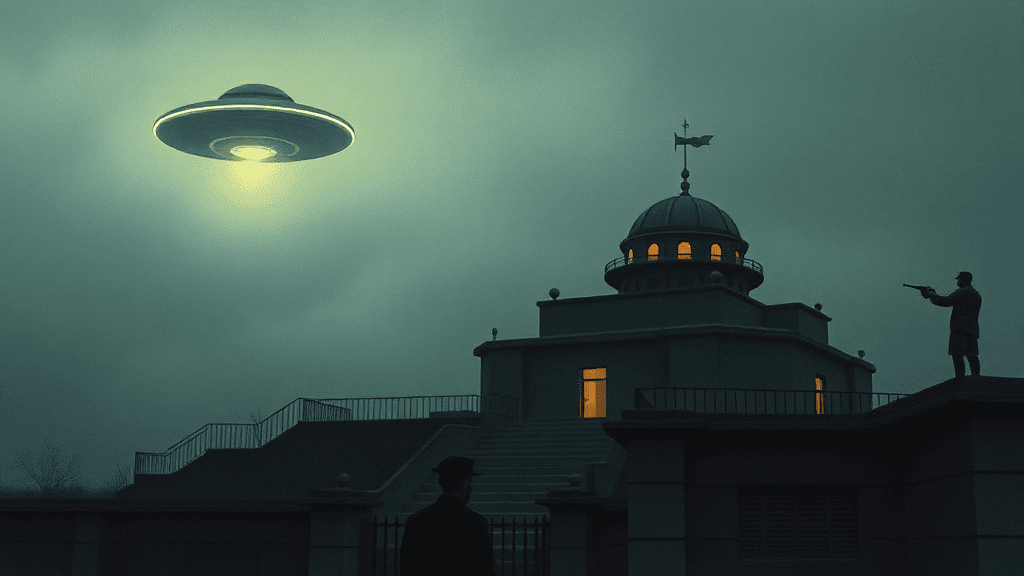
For months in 1977–78, residents of the Brazilian island of Colares reported being attacked by luminous aerial objects that fired beams of light, leaving burns and puncture wounds — prompting the Brazilian Air Force to launch Operation Saucer (Operação Prato), the most extensive military UFO field investigation in Latin American history.
Background
Colares is a small, low-lying island in the Marajó Bay estuary of the Amazon River in the northern Brazilian state of Pará. In 1977, its population numbered roughly 2,000 — mostly subsistence fishermen, farmers, and their families living without electricity in simple wooden and thatch houses. The nearest city of any size was Belém, the state capital, about 70 kilometres to the southeast. The island had one health clinic, no television reception, and no telephone service. It was, in other words, among the most isolated communities in Brazil.
This isolation matters for understanding what followed. The residents of Colares and the surrounding communities on Mosqueiro Island and along the Pará coast had little exposure to UFO lore. Brazil had no equivalent of the American UFO culture industry — no Project Blue Book, no popular UFO magazines circulating in the Amazon delta. When strange lights began appearing over the bay in late 1977, the people of Colares interpreted them not through the lens of science fiction but through their own regional folklore, which already contained stories of predatory aerial lights known locally as chupa-chupa — literally "sucker-sucker," the same word used for a lollipop.
The broader context is also significant. In 1977, Brazil was governed by a military dictatorship that had been in power since 1964. The armed forces were the dominant institution in Brazilian life, and the Air Force — the Força Aérea Brasileira (FAB) — controlled all matters related to aerospace. When reports of strange aerial phenomena began filtering up the chain of command, the military response was swift, hierarchical, and deeply secretive. It would remain so for nearly three decades.
Events
The flap began in earnest around mid-1977, though scattered reports of unusual lights had surfaced in the region as early as April. Fishermen working the tidal channels near Ilha dos Caranguejos (Crab Island) reported seeing luminous objects hovering at low altitude over the water. By August and September, the sightings had intensified and moved closer to populated areas. Residents of Colares, Mosqueiro, and the town of Vigia began reporting nightly visitations by objects of varying shapes — some described as disc-shaped or oval, others as cylindrical or resembling an inverted umbrella, and still others as simple brilliant orbs of white, blue-white, or red-orange light.
What set the Colares flap apart from conventional UFO sighting waves was the reported physical aggression of the objects. Witnesses consistently described narrow beams of intense light — estimated at roughly 25 centimetres in diameter — being projected downward from the hovering craft onto people below. These beams were said to cause immediate paralysis, intense burning sensations, and in some cases visible injuries. The objects reportedly pursued victims who attempted to flee, and the beams seemed capable of penetrating roofing materials. Terrified residents gave the lights their folk name: chupa-chupa. Some claimed the lights were "sucking blood" from victims, a belief reinforced by the puncture-like wounds that appeared on the skin of those struck by the beams.
The panic was real and measurable. Residents began sleeping in groups, lighting bonfires on the beach, and banging pots and drums through the night in attempts to scare the lights away. Families abandoned outlying farms and converged on the town centre. The mayor of Colares sent urgent messages to the state government requesting assistance. Local doctors were overwhelmed by patients presenting with unexplained symptoms.
Notable witness accounts
Several individual cases became central to the narrative:
-
Claudomira Paixão, a Colares resident, reported being struck on the chest by a beam of greenish-white light while sleeping in a hammock. She described being paralyzed and feeling an intense sucking sensation. When examined, she bore three circular burn marks on her upper chest, each roughly two centimetres in diameter with a central puncture point.
-
Benedito Campos and Silvia Marie, a married couple, reported that a disc-shaped object appeared above their home and projected a green beam through the roof. Silvia described entities entering through the illuminated opening. Both suffered burns and prolonged disorientation.
-
Alfredo Marques Soares, a farmworker, reported being immobilized by a yellow-white beam of light while working in a field. He was found with severe bruising and blistering on his torso and was incapacitated for days.
-
José Benedito Bogéa claimed to have been transported several miles from his original location, waking in an unfamiliar area with intense body pain and no memory of the intervening time.
The medical evidence
The most credible contemporary documentation came from Dr. Wellaide Cecim Carvalho, the sole physician staffing the Colares health clinic. Dr. Carvalho treated between 35 and 40 patients presenting with injuries she attributed to the chupa-chupa phenomenon. Her clinical observations, later shared with investigators, described a consistent pattern:
- Lesions: Burns resembling radiation injuries appeared primarily on the face, chest, and neck. The affected skin showed intense reddening followed by rapid peeling — occurring within hours rather than the 72-hour timeline typical of thermal or UV burns.
- Puncture wounds: Small, circular puncture marks were found within the burned areas, often in triangular arrangements. These were most frequently located on the left side of the body — the left breast in women, the left arm or leg in men.
- Systemic symptoms: Patients complained of dizziness, headaches, extreme fatigue, low blood pressure, and weakness lasting days to weeks. Blood tests on several victims revealed lowered hemoglobin levels, consistent with blood loss, though no external hemorrhaging was observed.
- Neurological effects: Temporary paralysis during the beam exposure was reported universally. Some patients experienced lingering numbness and visual disturbances.
Dr. Carvalho was not a UFO enthusiast. She was a young physician completing a required rural service posting. Her documentation was clinical in nature and predated any contact with ufologists. She would later state in interviews: "I was very scared. I didn't know what to make of it. The injuries were real — I treated them. But I had no explanation for what caused them."
Operation Saucer (Operação Prato)
By late September 1977, reports of the Colares incidents had reached the First Regional Air Command (I COMAR) headquarters in Belém. The regional commander, Brigadier Protásio Lopes de Oliveira, authorized a field investigation. On October 1977, a team was dispatched to Colares under the command of Captain Uyrangê Bolivar Soares Nogueira de Hollanda Lima, an Air Force intelligence officer.
The operation was designated Operação Prato — Operation Saucer — and it would become the first and only Brazilian Air Force operation conducted solely to investigate UFO-related phenomena. Hollanda's team consisted of more than twenty personnel, including military photographers, technicians, and intelligence analysts. They were equipped with cameras, telescopes, radio transmitters, Super 8 film cameras, and geiger counters.
For approximately four months — from October 1977 through January 1978 — the Operation Saucer team lived among the residents of Colares and conducted a systematic investigation. They:
- Collected over 500 photographs and 16 hours of Super 8 film footage of luminous phenomena in the sky
- Conducted hundreds of interviews with witnesses across Colares, Mosqueiro, and neighbouring communities
- Gathered soil and material samples from alleged landing or beam-impact sites
- Maintained nightly observation posts equipped with cameras and optical instruments
- Produced detailed sketches and technical drawings based on witness descriptions
Hollanda and his men reportedly observed the phenomena themselves on multiple occasions. In his later testimony, Hollanda described seeing objects that approached observation posts closely — in some cases within a few hundred metres — and that appeared to demonstrate intelligent, reactive behaviour, retreating when illuminated by military searchlights and returning when the lights were extinguished.
One particularly striking detail from Hollanda's account concerned the translucency effect: he stated that witnesses commonly reported roof tiles appearing to become "transparent, as if turned into glass" when the beams passed through them. This detail was consistent across multiple independent testimonies.
In early 1978, the operation was abruptly terminated. The official conclusion stated that no unusual phenomena had been found. All photographs, film, reports, and physical samples were classified and sent to Brasília. Captain Hollanda was reassigned. The investigation file was sealed.
The case for
The Colares flap possesses several features that distinguish it from typical UFO sighting waves and lend it a degree of credibility unusual for cases of this type:
Volume and consistency of testimony. The sheer number of witnesses — estimated at over 2,000 across multiple communities — makes coordinated fabrication implausible. The witness population was largely illiterate, without access to media that could have shaped a shared narrative. Yet the accounts are strikingly consistent in their descriptions of object types, beam characteristics, and physical effects.
Contemporary medical documentation. Dr. Wellaide Cecim Carvalho's clinical records were created in real time, not reconstructed from memory. The pattern of injuries she documented — radiation-like burns with anomalous healing timelines, unexplained puncture wounds, lowered hemoglobin — does not correspond to any known natural phenomenon or self-inflicted injury pattern.
Military corroboration. Captain Hollanda and his team reported observing the phenomena directly. While the official conclusion was negative, Hollanda's later testimony directly contradicted it, describing encounters that left him personally convinced the objects were under intelligent control.
Government investment. The Brazilian Air Force committed significant resources — personnel, equipment, and months of field time — to the investigation. This level of commitment suggests that command-level officers took the reports seriously enough to justify the expenditure, even if the official conclusion was designed to close the matter.
Physical evidence. The burn marks, puncture wounds, and hemoglobin changes documented by Dr. Carvalho represent physical evidence that, while not conclusive, is difficult to explain through conventional means.
The case against
Skeptical analysis of the Colares flap raises several significant challenges:
Mass hysteria and cultural context. The chupa-chupa phenomenon was not unique to 1977 or to Colares. Reports of predatory aerial lights appear in Amazonian folklore going back generations. Skeptics argue that an initial misidentification — perhaps of a bright planet, a satellite, or a fishing boat's light reflected off low clouds — could have triggered a cascade of fear-driven reports amplified by pre-existing cultural beliefs. The community's isolation and lack of education made it particularly susceptible to such dynamics.
Self-inflicted and misattributed injuries. Dr. Zoghbi, a physician who examined some victims, concluded that the injuries were consistent with "self-inflicted nail scratching during a hysterical attack" rather than external beam weapons. Other medical professionals characterized the wounds as "snare injuries" caused by contact with fingernails, branches, or rough surfaces during panic.
Compromised photographic evidence. Fernando Costa, the son of Sergeant João Flávio de Freitas Costa (a member of the Operation Saucer team), later confessed to deliberately tampering with photographs. He admitted to enlarging light dots on film to make them resemble UFOs, and expressed amusement when these doctored images appeared in ufology publications. This raises serious questions about the integrity of the photographic record.
Narrative inflation over time. The most dramatic claims — blood extraction, entity encounters, transported victims — emerged primarily in retrospective accounts given years or decades after the events. The contemporary documentation, while noting injuries and lights, is considerably more restrained. Skeptics point to a pattern of story enhancement typical of UFO narratives that acquire legendary status.
Missing evidence. Despite claims of 500 photographs and 16 hours of film, the Brazilian Air Force has never released the video footage. Only a handful of photographs have become public, and their provenance and authenticity remain uncertain. The absence of this allegedly extensive evidence is, for skeptics, more telling than its existence.
Captain Hollanda's testimony and death
The Colares case might have faded into obscurity had it not been for a dramatic development twenty years later. In October 1997, retired Captain Uyrangê Hollanda agreed to a filmed interview with Brazilian ufologists Ademar José Gevaerd (editor of the Revista UFO Brasileira and founder of the Centro Brasileiro de Pesquisas de Discos Voadores) and Marco Antônio Petit.
In the interview, Hollanda broke his decades-long silence and directly contradicted the official Operation Saucer conclusion. He described repeated close encounters with structured craft displaying intelligent behaviour. He stated that the objects reacted to observation, that beams were directed at his team, and that the experience left him profoundly shaken. He expressed the belief that the objects were under the control of a non-human intelligence.
Hollanda also revealed that he had been instructed by his superiors to report that nothing unusual had been found, despite what he and his team had witnessed. He claimed the classified files sent to Brasília contained evidence that would vindicate the witnesses of Colares.
Approximately three months after giving this interview, in early 1998, Hollanda was found dead at his home. The official cause of death was suicide by hanging, using the belt of his bathrobe. No suicide note was found. His death inevitably attracted conspiracy theories, with some ufologists suggesting he had been silenced for breaking his oath of secrecy. However, friends and family indicated that Hollanda had been suffering from depression, and no evidence of foul play was established.
Declassification and aftermath
In 2004–2005, persistent lobbying by Gevaerd and other Brazilian ufologists — combined with a general shift toward transparency in the post-dictatorship era — resulted in the partial declassification of Operation Saucer files. The Brazilian National Archives released witness testimonies, sketches, and a selection of photographs. The documents confirmed that the Air Force had indeed conducted a substantial investigation and that witnesses had reported beam attacks, physical injuries, and objects displaying anomalous flight characteristics.
However, the release was incomplete. The Super 8 film footage has never surfaced. Many documents were marked as reproductions rather than originals, and some bore stamps that Brazilian officials later certified as non-authentic — raising questions about whether the released files had been curated or altered. The most sensitive materials, if they exist, remain classified.
Cultural impact
The Colares flap occupies a unique place in the global UFO canon. It is one of very few cases in which a national military conducted an extended field investigation while the phenomena were actively occurring — not as a retrospective review of past events, but as a real-time attempt to document and understand ongoing incidents. In this respect, Operation Saucer is arguably more significant than Project Blue Book, which was primarily a desk-based review operation.
The case is also notable for its emphasis on physical effects. Most UFO sighting waves involve lights in the sky and nothing more. The Colares reports, with their burns, puncture wounds, blood anomalies, and widespread terror, more closely resemble accounts from the Cash-Landrum incident or radiation-exposure cases than typical sighting reports. This has made the Colares flap a recurring reference point in discussions of UFO-related health effects, particularly in the context of the Skinwalker Ranch investigations and the AAWSAP programme's interest in "anomalous health effects."
In Brazil, the case has become a touchstone of national ufology. The town of Colares has embraced its unusual history, and the incident is referenced in Brazilian documentaries, books, and media. Internationally, it gained wider attention through Jacques Vallée's investigations and through the declassification of the military files.
Current status
The Colares UFO flap remains contested. The physical injuries documented by Dr. Carvalho and the military's own classified investigation lend the case more evidentiary weight than most UFO events. At the same time, the compromised photographic record, the narrative inflation over decades, the alternative medical explanations for the injuries, and the absence of the film footage prevent any definitive conclusion.
No conventional explanation has been widely accepted. The objects were not identified as aircraft, satellites, or natural phenomena by the military investigation. Skeptics tend to favour a combination of mass panic, misidentification, and cultural amplification, while proponents point to the medical evidence and the military's own suppressed findings.
The case endures because it confronts a question that most UFO incidents avoid: if the phenomenon is real, can it be harmful? The people of Colares in 1977 believed the answer was yes — and their scars, whatever caused them, were not imaginary.
Witnesses
- Dr. Wellaide Cecim Carvalho — sole physician at the Colares health clinic; treated 35–40 patients with beam-related injuries and documented clinical findings including burns, puncture wounds, and lowered hemoglobin
- Claudomira Paixão — Colares resident struck by a greenish-white beam; bore three circular burn marks on her chest
- Benedito Campos & Silvia Marie — married couple who reported a disc projecting a green beam through their roof and entities entering their home
- Alfredo Marques Soares — farmworker immobilized by a yellow-white beam; suffered severe bruising and blistering
- José Benedito Bogéa — claimed abduction, transported miles from his location with no memory of the transit
- Captain Uyrangê Bolivar Soares Nogueira de Hollanda Lima — commander of Operation Saucer; reported direct personal observations of the phenomena
- João Barros — experienced intense burning pain after a craft passed nearby
- Over 2,000 residents across Colares, Mosqueiro, Vigia, and surrounding communities reported sightings
Evidence
- Medical documentation: Dr. Wellaide Cecim Carvalho's clinical records of 35–40 patients with radiation-like burns, triangular puncture wounds, and lowered hemoglobin levels
- Military investigation: Operation Saucer collected over 500 photographs, 16 hours of Super 8 film, hundreds of witness interviews, and soil/material samples (most remain classified)
- Declassified files: Partial release in 2004–2005 via the Brazilian National Archives confirmed witness testimonies, sketches, and selected photographs
- Physical injuries: Burns with anomalously rapid peeling, circular puncture marks, and systemic symptoms documented on dozens of victims
- Military witness testimony: Captain Hollanda's 1997 filmed interview describing direct observation of structured craft with intelligent behaviour
- Compromised photographic evidence (caveat): Fernando Costa confessed to doctoring some photographs, casting doubt on portions of the visual record
- No film footage released: Despite claims of 16 hours of Super 8 film, no video has been made public
Filed under
Watch
The Most Witnessed UFO Incident in History | Operation Prato
Where this entry came from
ProvenanceAgent indexedUpdated 6mo ago9 sources
Drafted by the archive's AI research agent from the sources below; corrections from readers are reviewed and folded in.
- First indexed
- 26 APR 26 // 21:20Z
- Last updated
- 26 APR 26 // 21:20Z
- Operação Prato, Wikipedia
- The 1977 Colares Island Incident, Marcus Lowth, UFO Insight
- 1977 Colares UFO Flap / Operação Prato, Metabunk
- Operação Prato — MUFON/Pratt Documents, Bob Pratt, The Black Vault
- UFO sightings in Brazil, Wikipedia
- Operation Saucer: The Official Search For UFOs That Attacked Brazilians With 'Light Beams' In 1977, Yahoo News UK
- The Colares UFO Flap (1977), Unidentified Phenomena
- Colares, Brazil, 1977, Patrick Gross, UFOlogie.net
- Colares 1977 to 1978: From UAP flap to military investigation and filled hospital beds, UAPedia
Notes
- Operação Prato, Wikipedia
- The 1977 Colares Island Incident, Marcus Lowth, UFO Insight
- 1977 Colares UFO Flap / Operação Prato, Metabunk
- Operação Prato — MUFON/Pratt Documents, Bob Pratt, The Black Vault
- UFO sightings in Brazil, Wikipedia
- Operation Saucer: The Official Search For UFOs That Attacked Brazilians With 'Light Beams' In 1977, Yahoo News UK
- The Colares UFO Flap (1977), Unidentified Phenomena
- Colares, Brazil, 1977, Patrick Gross, UFOlogie.net
- Colares 1977 to 1978: From UAP flap to military investigation and filled hospital beds, UAPedia
Further reading

Vampiros extraterrestres na Amazônia (opens in a new tab)
Giese's Portuguese-language book on the Colares reports, written by a Brazilian ufologist who researched the case.

Confrontations
Vallée's catalogue of reported encounters, which includes the 1977 Colares reports from Brazil.
Buying through these links supports the library. We may earn a commission.
Also available
UFO Files: Brazil's Roswell
Documentary episode investigating the 1977 Colares UFO flap in Brazil, where residents reported UFO sightings and alleged attacks, leading to a 500-page investigation by the Brazilian Air Force.
Buying through these links supports the library. We may earn a commission.