The UFO Library: Military encounter
Iskra Baltic Interception (1983)
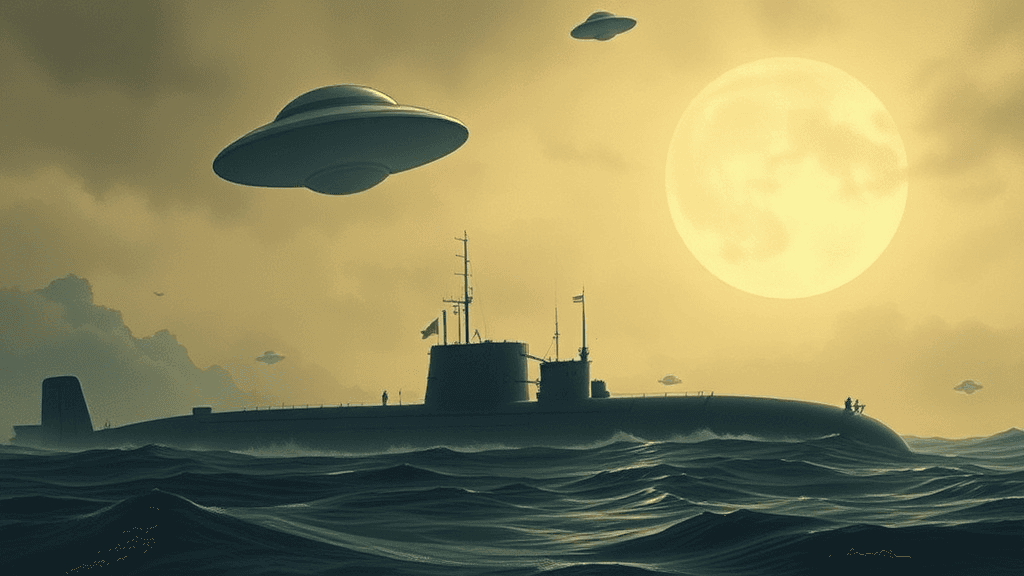
A Polish Air Force TS-11 Iskra training crew, ordered to intercept a radar-tracked target over the Baltic in July 1983, reported closing to a few hundred metres on a wingless black cylinder; the case was never officially explained.
On 6 July 1983, during the closing days of the NATO naval exercise BALTOPS '83, a Polish Air Force TS-11 Iskra training aircraft was ordered to intercept an air target tracked by radar over the Baltic Sea. According to the account later published by a retired Polish Air Force officer, the crew, Capt. Zbigniew Praszczałek and Ensign Marek Jacewicz, closed to within several hundred metres of the object. The pilot described a black, elongated cylinder about six metres long with rounded ends, with no wings, tail, visible engine or exhaust. The object reportedly made sudden manoeuvres, and the pilot received permission to open fire only as the target was vanishing from view.
Background and the source
The incident is known mainly through Polscy piloci i UFO ("Polish Pilots and UFOs", Wydawnictwo Czas UFO, 1999), written by Col. Ryszard Grundman, a long-serving pilot and former head of the air traffic service of the Polish Air Force, with journalist Bronisław Rzepecki. Grundman says he learned of the event in 1983 from Col. Jerzy Topolnicki, then head of aviation, who reportedly retrieved Praszczałek's report from a safe. The account is therefore secondhand: no copy of the original report has been published, and the book is the sole detailed source found in the research for this entry.
Explanations considered
National Geographic Poland's 2026 retrospective, which drew on the book and on Polish military records, weighs several mundane possibilities. Exercise debris such as towed gunnery sleeves or artificial aerial targets, both in use near Ustka and Słupsk that week, could explain the shape but not the reported manoeuvres. A meteorological balloon from the Łeba aerological station could have drifted through the area, but a balloon would not make sharp turns. A radar false echo, or a pilot visually identifying a different object from the one the radar was tracking, is presented as plausible. Own-aircraft manoeuvres could also make a distant object appear to move erratically. None of these is confirmed for this event.
Official follow-up
Grundman cites a 1984 military regulation on "unusual flying objects" that required crews to report sightings, track objects, secure materials, and forward analyses to the General Staff. In August 2026 the Polish Ministry of National Defence told the article's author it had no information on any successor document, and the director of the Air Force Academy archive in Dęblin found no related instructions or training material. A late-2025 petition and draft bill on monitoring unidentified aerial phenomena has since been submitted to the Sejm, which has brought the case back into public discussion.
Assessment
The case is typically cited as an example of a military crew reporting a target it could not identify. It is not evidence of extraterrestrial activity, and the article that revived it treats it as unresolved rather than solved. Because the account rests on one book and on a pilot's report that has not been released, the event should be read as a credible-sounding but unverified military report. It is worth noting as a Cold War-era Eastern Bloc counterpart to better-documented Western interceptions, and as an example of how archival gaps shape what can be known about such events.
Witnesses
Capt. Zbigniew Praszczałek (pilot, per the account) and Ensign Marek Jacewicz, Polish Air Force TS-11 Iskra crew. Ryszard Grundman and Col. Jerzy Topolnicki are the secondhand chain of reporting.
Evidence
None physical. The only evidence is the crew's report as described in 1999 and the radar contact referred to in the account. No radar data, photographs or released official documents have been published.
Filed under
Where this entry came from
ProvenanceAgent indexedUpdated 13d ago3 sources
Drafted by the archive's AI research agent from the sources below; corrections from readers are reviewed and folded in.
- First indexed
- 29 OCT 26 // 17:18Z
- Last updated
- 29 OCT 26 // 17:18Z
- Polscy piloci ruszyli za UFO. Tajemnica wojskowego lotu nad Bałtykiem, National Geographic Polska, National Geographic Polska
- UFO sightings in Poland, Wikipedia contributors, Wikipedia
- The Emilcin incident: a Polish encounter of the fourth kind, culture.pl, culture.pl
Notes
- Polscy piloci ruszyli za UFO. Tajemnica wojskowego lotu nad Bałtykiem, National Geographic Polska, National Geographic Polska
- UFO sightings in Poland, Wikipedia contributors, Wikipedia
- The Emilcin incident: a Polish encounter of the fourth kind, culture.pl, culture.pl