The UFO Library: Humanoid encounter
Isla de Lobos Lighthouse Incident
A Uruguayan Navy corporal guarding a remote lighthouse reports a landed craft and three humanoid figures, paralysis, and a telepathic warning not to fire his weapon.
Background
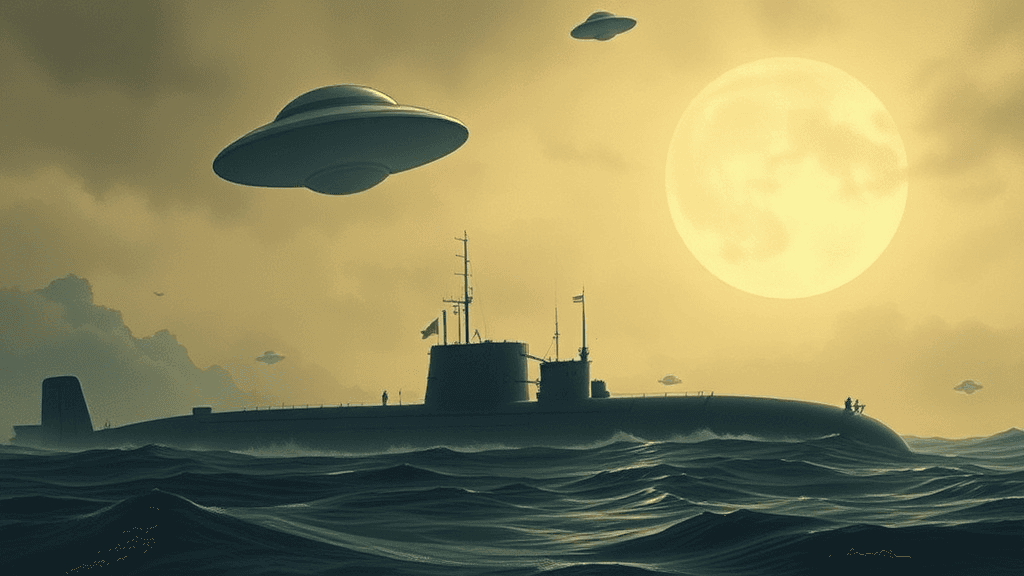
Isla de Lobos is a small, wind-scoured island roughly ten kilometers off Punta del Este, Uruguay, at the point where the Río de la Plata estuary widens into the South Atlantic. Since 1906 it has hosted South America's tallest lighthouse, an automated navigational beacon whose light needed no human hand to operate — but whose diesel generators did. The Uruguayan Navy kept a rotating garrison of four or five ratings on the island to maintain the generators and radio equipment, an isolated posting with little to do after dark beyond routine watch duty.
By 1972, Uruguay was sliding into the political turmoil that would produce the following year's civil-military coup, and its small ufological community was, somewhat improbably, one of the more organized in South America. A civilian research body, C.I.O.V.I. (Centro de Investigaciones de Objetos Volantes No Identificados), had been cataloguing sightings for years, and Uruguayan journalist Milton Hourcade — a Center for UFO Studies representative personally appointed by J. Allen Hynek and later a MUFON research specialist — had already spent over a decade building the country's reputation for methodical case work. It was into this environment that a young naval corporal's report from an all-but-uninhabited island would drop.
Events
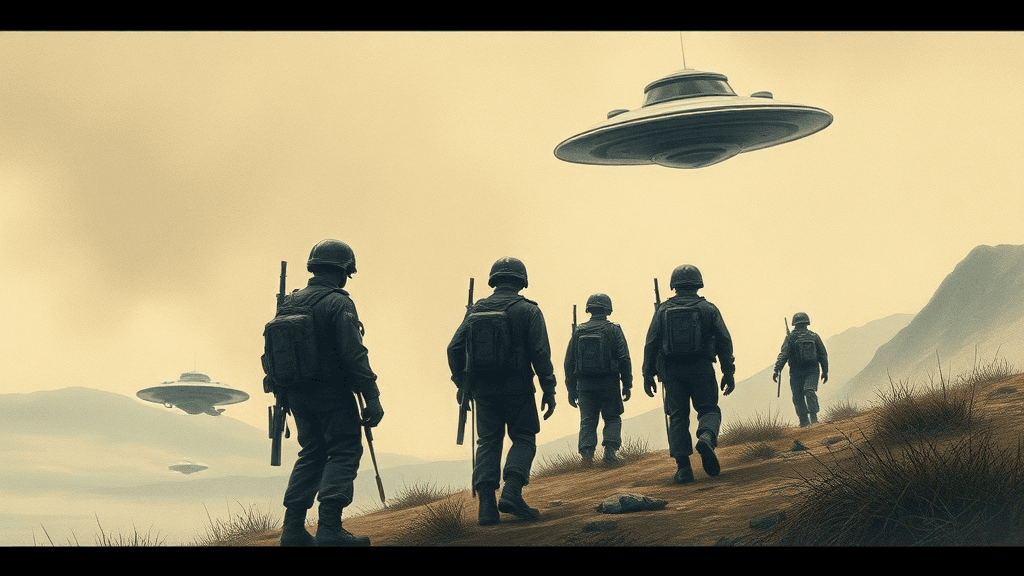
On the island that night were five men: Corporal Juan Fuentes Figueroa, ratings Jose Gomez and Hector Gimenez, telegraph operator Jose Lima, and sub-officer Francisco Cascudo. At around 10:15 p.m. on October 28, 1972, Fuentes was alone outside near the generator building when he noticed a glow in the sky that resolved into a metallic, luminous object — described in later accounts as roughly disc-shaped and, in Fuentes's own words, colored something like mahogany rather than the gunmetal grey typically reported for military aircraft. The object descended and came to rest, or hovered very close to the ground, near the generator shed.
Three humanoid figures then emerged from or near the craft. Witness descriptions given to investigators put two of the figures at around 1.50 meters (about 5 feet) tall, with a third figure — described as the last to move — at roughly 1.75–1.80 meters. Fuentes watched the figures at close range, by his account for close to a minute, before instinct took over: he began to raise his sidearm to challenge them.
He never completed the motion. Fuentes reported that his body locked into place mid-gesture, gripped by a paralysis he was unable to fight, while remaining fully conscious of his surroundings. In that frozen moment he says he received a message that arrived not as sound but as an impression inside his own mind, rendered afterward in Spanish: "No dispares, que es inútil" — "Don't shoot, it's useless." The three figures withdrew without any further gesture toward him, re-boarded the craft, and it climbed away from the island at what Fuentes described as extreme speed, its light fading into the night. None of the other four men on the island directly witnessed the entities or the craft; Fuentes was alone at the critical moment, and by the time he could raise the alarm the episode was already over.
Investigation
Word of the encounter reached Uruguayan naval authorities and, through them, C.I.O.V.I., whose lead investigator on the case, Germán Vázquez, examined the physical surroundings, the generator building, and the accounts of the other four men on the island and reported finding no natural or man-made stimulus — no aircraft, weather balloon, atmospheric phenomenon, or equipment malfunction — that adequately explained what Fuentes described. Multiple secondary ufological accounts state that psychologists engaged by C.I.O.V.I. subjected Fuentes to standard testing and interviews, and concluded he was a plain, sincere man with no capacity or apparent motive for fabricating a story of this kind; his account reportedly held together under repeated, separated questioning without contradiction.
The case also drew outside attention: several sources, including material later cited in connection with Uruguay's 2010s declassification of military UFO files, assert that officials connected to the U.S. Embassy in Montevideo took an interest and showed Fuentes drawings of various craft designs to see whether he could identify a match — the kind of detail that, if accurate, would indicate the case was taken seriously well beyond Uruguay's small ufological circle, though independent confirmation of the embassy's involvement is thin in the English-language record.
Physicist Willy Smith, who ran the UNICAT project cataloguing high-quality South American UFO cases, is reported by proponent researcher Carlos Ferguson to have analyzed the Isla de Lobos file in some depth and judged it to display genuinely anomalous characteristics rather than the hallmarks of hoax or simple misperception. It is on the strength of this combination — a psychologically vetted, single but consistent witness, a formal civilian investigation, and an absence of an obvious mundane trigger — that the case built its reputation within ufology as one of the strongest close-encounter reports to come out of South America.
The case for and against
That reputation, however, is not undisputed — and unusually, the dispute comes from within the case's own investigative lineage rather than from outside skeptics. Hourcade, the very ufologist whose early work helped establish Uruguay's UFO research credentials and who originally treated Isla de Lobos as a strong case in his 1978 book OVNIs: Desafío a la Ciencia, reversed himself decades later. Around 2005, Hourcade proposed that Fuentes had most likely encountered a misidentified Argentine military Hughes 500 helicopter operating in the area, its lights and shape misread in the dark and its crew mistaken for the humanoid figures.
Proponent researcher Carlos Ferguson has published a detailed rebuttal of the helicopter hypothesis, arguing several points don't fit: Fuentes and the other men on the island reported no rotor noise preceding the sighting, only a brief hum as the object departed, which sits awkwardly with a helicopter approach and landing; Argentine military aviation records available to Ferguson show the Hughes 500s in question painted standard olive green, not the mahogany-like tone Fuentes described; and the behavior of the occupants — silently withdrawing from an armed man without any attempt at communication, confrontation, or use of a weapon of their own — reads more easily as an encounter narrative than as a startled helicopter crew reacting to a sentry. Ferguson also cites later, less-corroborated claims that Fuentes developed burn-like marks on his skin after the encounter, a detail almost absent from the earlier English-language ufological write-ups and one that, if genuine, would argue against a simple case of aircraft misidentification — though it equally lacks the kind of documentation (medical records, photographs) that would let it settle the question either way.
Weighing the two sides fairly: the case's strength has always rested on secondhand characterizations of an investigation whose primary Spanish-language documentation is not easily accessible, filtered largely through enthusiastic ufological retellings; and its most credentialed original chronicler ultimately walked back his own endorsement in favor of a conventional, if not fully proven, explanation. A single witness reporting paralysis and telepathic communication — phenomena for which there is no independent instrumental evidence of any kind — sits at the more extraordinary end of humanoid-encounter claims, and the corroborating testimony of the other four men on the island amounts only to vouching for Fuentes's character, not for the encounter itself, since none of them witnessed it directly. The case is genuinely well-investigated by the standards of civilian ufology in 1970s Uruguay, but "well-investigated" and "well-explained" are not the same thing, and it would be inaccurate to present Isla de Lobos as resolved evidence of non-human contact when even its most prominent original investigator no longer endorses that reading.
Cultural impact
Isla de Lobos entered the canon of South American ufology as a marquee case, frequently grouped with contemporaneous humanoid encounters from the region — most often compared to the Rojas-Peñafiel encounter in Peru from roughly the same period — as evidence that the early-1970s wave of close encounters was not confined to North America or Europe. It fed directly into Uruguay's unusually formal institutional relationship with UFO research: the country became a rare case of a South American state establishing an official military body to receive and evaluate UAP reports later in the decade, a step ufologists have often pointed back to Isla de Lobos and cases like it as having helped justify. Hourcade's involvement also tied the case, however loosely, into the broader international ufology network of the era — his CUFOS and MUFON affiliations meant Isla de Lobos was reported on, at least in summary form, well outside Uruguay, and it remains one of the handful of Uruguayan cases that regularly appears in English-language UFO case compendiums.
Current status
No Uruguayan government body has ever issued a formal conclusion on the Isla de Lobos incident, and it remains — as C.I.O.V.I.'s own contemporaneous finding put it — a case with no identified natural or artificial explanation, rather than a confirmed encounter with non-human intelligence. The file continues to circulate primarily through ufological websites and secondary compilations rather than through accessible primary documentation, and the central factual dispute — genuine encounter versus misidentified military helicopter — has never been definitively closed, with the case's own most prominent early champion ending up on the skeptical side of that question. It is best treated today as a compelling, still-unresolved regional case rather than one of the settled pillars of the UFO evidentiary record.
Witnesses
Primary witness: Corporal Juan Fuentes Figueroa, Uruguayan Navy, on solitary watch at the Isla de Lobos lighthouse generator building. Present on the island but not direct witnesses to the entity encounter: ratings Jose Gomez and Hector Gimenez, telegraph operator Jose Lima, and sub-officer Francisco Cascudo — their testimony corroborates Fuentes's character and the immediate aftermath, not the encounter itself.
Evidence
No physical or instrumental evidence (photographs, radar returns, physical traces) has been publicly documented. The case rests on: Fuentes's own testimony, given consistently under repeated questioning; psychological evaluation of Fuentes by evaluators engaged through C.I.O.V.I., who reportedly found him sincere and unlikely to fabricate; the on-site investigation by C.I.O.V.I. investigator Germán Vázquez, who found no natural or artificial explanation; reported (but thinly documented) interest from U.S. Embassy officials in Montevideo; a later analysis by physicist Willy Smith for the UNICAT South American case catalog, said to have found the case anomalous; and disputed secondary claims of burn-like marks on Fuentes's body after the event. Countering this is Milton Hourcade's later proposal of a misidentified Argentine military helicopter, itself unconfirmed by released flight records.
Filed under
Watch
【💥2026最新動漫】廢柴被拋棄後覺醒機械神豪系統!黑科技爆改机甲,逆袭掌控末世帝国!【末世:S级机甲开局,我无敌了 】#donghua #anime
Where this entry came from
ProvenanceAgent indexedUpdated 2mo ago8 sources
Drafted by the archive's AI research agent from the sources below; corrections from readers are reviewed and folded in.
- First indexed
- 20 AUG 26 // 04:19Z
- Last updated
- 30 AUG 26 // 16:50Z
- Alien Encounter at Isla de Lobos, Uruguay, October 28, 1972, UFO Case Book, UFO Case Book
- The Isla de Lobos Lighthouse Incident, UFO Insight, UFO Insight
- The Mysterious Isla de Lobos Lighthouse UFO Incident, Anomalien, Anomalien
- 1972: Alien Encounter at Isla De Lobos, Uruguay, Think About It Docs, Think About It Docs
- Uruguay Government Release UFO Documents, Colin Andrews, Colin Andrews Research
- Caso Isla de Lobos: OVNI y ocupantes a corta distancia y la disparatada versión de un desinformador, Carlos Ferguson, carlosferguson.com.ar
- Encounter with Aliens by a Uruguayan Navy Sailor in 1972, UFOAC, UFOAC
- Milton Hourcade, experto en ovnis: 'Si vienen los extraterrestres, no lo van a hacer en algo que cae y se rompe', El Observador, El Observador
Notes
- Alien Encounter at Isla de Lobos, Uruguay, October 28, 1972, UFO Case Book, UFO Case Book
- The Isla de Lobos Lighthouse Incident, UFO Insight, UFO Insight
- The Mysterious Isla de Lobos Lighthouse UFO Incident, Anomalien, Anomalien
- 1972: Alien Encounter at Isla De Lobos, Uruguay, Think About It Docs, Think About It Docs
- Uruguay Government Release UFO Documents, Colin Andrews, Colin Andrews Research
- Caso Isla de Lobos: OVNI y ocupantes a corta distancia y la disparatada versión de un desinformador, Carlos Ferguson, carlosferguson.com.ar
- Encounter with Aliens by a Uruguayan Navy Sailor in 1972, UFOAC, UFOAC
- Milton Hourcade, experto en ovnis: 'Si vienen los extraterrestres, no lo van a hacer en algo que cae y se rompe', El Observador, El Observador
Also available
The Phenomenon
Comprehensive investigation of UFO sightings worldwide since World War II, featuring interviews with government officials and military witnesses. Includes South American military cases and the recently declassified Pentagon UFO videos.
Encounters
Netflix miniseries exploring extraordinary UFO encounters from around the world, including international military cases and civilian sightings. Features documented incidents from multiple continents over the past 50 years.
UFOTV Presents: UFOs In South America
Documentary investigation of UFO sightings across South America, with focus on documented cases involving military and government officials. Features research from leading UFO investigators and declassified government documents.
UFO Dossier: South America
Investigation into South American UFO cases and government declassified files. Examines patterns of sightings across the continent and explores testimony from credible witnesses including military personnel.
Buying through these links supports the library. We may earn a commission.