The UFO Library: Radar and visual
Kaikoura Lights
Cargo plane crews and an Australian TV crew filmed and tracked anomalous lights on radar over New Zealand's Kaikoura coast across multiple nights in December 1978.
Background
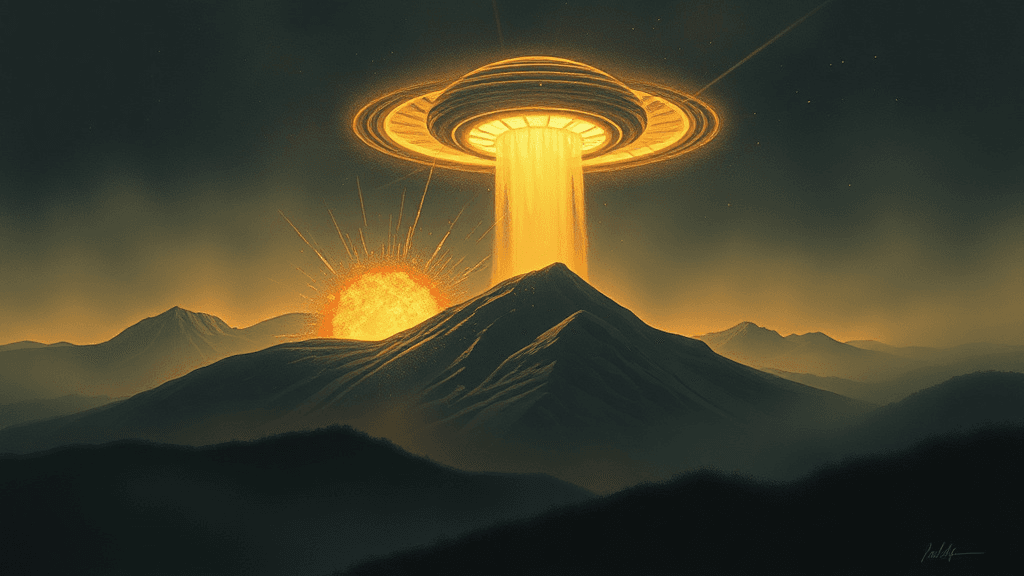
The Kaikoura mountain ranges run along the northeastern coast of New Zealand's South Island, a sparsely populated region where the Pacific Ocean meets the dramatic peaks of the Seaward Kaikoura Range. In late 1978 this stretch of coastline became the setting for one of the most thoroughly documented UFO encounters in the Southern Hemisphere — an event that combined trained pilot testimony, independent radar confirmation from multiple stations, ground-level civilian witnesses, and, crucially, approximately thirty seconds of 16mm colour film that would be analysed in a peer-reviewed scientific journal.
New Zealand in the late 1970s was not a country accustomed to UFO excitement. Unlike the United States, where Project Blue Book had spent two decades cataloguing sightings, New Zealand had no formal UFO investigation programme. The Royal New Zealand Air Force (RNZAF) handled occasional reports in an ad hoc manner, and public interest was modest. That changed dramatically over eleven days in December 1978, when a series of encounters along the Wellington–Christchurch air corridor generated worldwide headlines and forced the New Zealand government into an investigation it plainly did not want.
The corridor itself was well-travelled. Safe Air Ltd, a subsidiary of the Nelson-based freight airline, ran nightly cargo flights in ageing Armstrong Whitworth AW.660 Argosy turboprops, ferrying newspapers and parcels between the North and South Islands. The crews knew this route intimately — the weather patterns, the coastline, the fishing boats below. What they saw in the final weeks of 1978 did not fit any familiar category.
Events
The first encounter — 21 December 1978
At approximately 11:30 p.m. on 21 December, an RNZAF officer named Ian Uffindall observed an unusual bright light from the air force base at Blenheim, at the northern tip of the South Island. Around the same time, Safe Air cargo flight captained by Vern Powell with co-pilot Ian Pirie was operating Argosy ZK-SAE Merchant Enterprise on its routine Blenheim-to-Christchurch newspaper run.
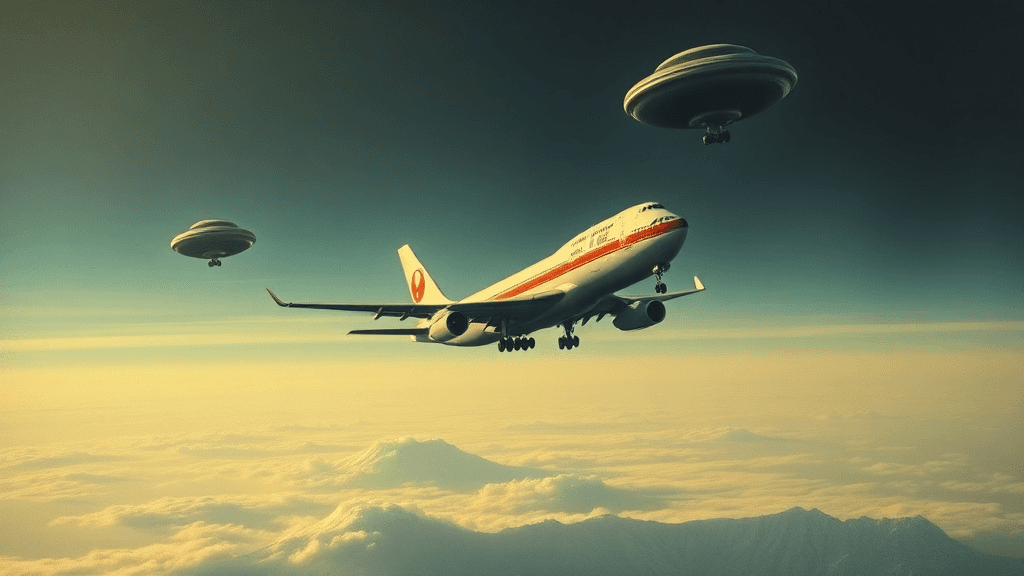
Powell and Pirie noticed a large, intensely bright light to their port side, glowing orange-red and appearing roughly the size of a house. The object paced their aircraft for several minutes, at times seeming to close distance rapidly before pulling away. Powell later estimated the light approached at speeds exceeding 10,000 miles per hour during its most aggressive movements. Co-pilot Pirie confirmed the intense orange glow and noted its erratic, unpredictable speed changes.
Critically, the object was not visible only to the aircrew. Air traffic controller John Cordy at Wellington International Airport tracked the target on radar and reported it as a solid return — not the diffuse signature typical of weather phenomena. In a transmission preserved on tape, Cordy told the flight crew: "Very strong on the radar now, it's as strong as you are." The object appeared to follow the aircraft for approximately twelve miles before vanishing from both visual and radar contact.
The Wellington radar also picked up what Cordy described as a "triangle of lights" pattern at one point during the tracking. Ground-level witness Mary Smith in the town of Kaikoura independently reported seeing unusual lights in the sky that same evening.
Powell and Pirie filed reports. The RNZAF took note. But the story might have faded into the archives had it not reached an Australian television producer nine days later.
The filmed encounter — 30–31 December 1978
Leonard Lee, a producer at Melbourne's Channel 0 (now Network 10), learned of the 21 December sighting and saw an opportunity. He contacted reporter Quentin Fogarty, a Dunedin-born journalist who happened to be on holiday with his family in Christchurch. Lee proposed that Fogarty and a camera crew board one of the nightly Safe Air cargo flights to shoot background footage for a segment about the earlier sighting. Nobody expected a repeat performance.
Shortly before midnight on 30 December, Fogarty, cameraman David Crockett, and sound recordist Ngaire Crockett (David's wife) joined pilots Captain Bill Startup and co-pilot Bob Guard aboard an Argosy for the Wellington-to-Christchurch run. The aircraft departed Wellington and headed south along the east coast of the South Island.
At approximately 2:30 a.m. on 31 December, as the Argosy flew at altitude near Kaikoura, the crew and television team began observing anomalous lights. The objects appeared as glowing red or orange orbs — some brilliant white — that moved in ways inconsistent with aircraft, satellites, or known celestial objects. One object appeared to illuminate the ocean surface below. Fogarty later described one as resembling "a flying saucer" with "a brightly lit bottom half and a clear, round top."
David Crockett, an experienced cameraman, managed to capture approximately thirty seconds of colour footage on 16mm film. The lights pulsated and shifted position, at times described by the crew as moving at speeds estimated around 3,000 miles per hour with sudden geometric manoeuvres — stops, starts, and right-angle turns that no conventional aircraft could execute.
Wellington air traffic control again confirmed the objects on radar. Controller John Cordy — the same operator who had tracked the 21 December targets — reported solid returns that tracked alongside the aircraft over more than forty miles. He was emphatic that these were not weather artefacts or equipment malfunctions. The targets appeared and disappeared from radar in ways that matched the visual observations of the aircrew and television team.
The return flight from Christchurch to Wellington reportedly produced further sightings, though less dramatic than the southbound leg.
Investigation
Official response
The sighting generated immediate international media interest. The film footage was broadcast around the world, and Fogarty's report became a global news event. The New Zealand government found itself under pressure to respond.
The RNZAF, the New Zealand Police, and the Carter Observatory in Wellington conducted a joint investigation. Their findings were lodged in the National Archives in Wellington, with some files initially classified. The New Zealand Ministry of Defence offered a suite of prosaic explanations: lights from squid fishing boats reflected off low cloud cover, unburnt meteors entering the atmosphere, the planet Venus, and even lights from trains and cars along the coastal highway.
In January 1979, New Zealand's Department of Scientific and Industrial Research (DSIR) submitted a report to the United Nations classifying the objects as "UFOs until identified" but stating that "the prospect of extra-terrestrial intervention being proved is regarded as extremely remote." The DSIR's working theory was that the filmed objects were "no more than general illumination (possibly produced by Jupiter or Venus) on the horizon."
Former DSIR scientist Bill Ireland later examined the footage and concluded that squid boats were the most likely cause, noting that images contained "clearly-resolved white lights" and "evidence of more than one row of lights" consistent with the dimensions of small squid boats approximately 25 metres long with rows of lamps strung along wires above the deck.
The Maccabee analysis
The most rigorous scientific examination of the film was conducted by Bruce Maccabee, an American optical physicist employed by the United States Navy at the Naval Surface Warfare Center. Maccabee obtained copies of the 16mm film and subjected them to detailed photometric analysis.
In August 1979, Maccabee published "Photometric Properties of an Unidentified Bright Object Seen off the Coast of New Zealand" as a letter to the editor in Applied Optics, a peer-reviewed journal of the Optical Society of America. This was one of the few instances in which UFO evidence received formal treatment in a mainstream scientific publication.
Maccabee's calculations indicated that the brightest object filmed was extremely luminous and approximately 20 metres or more in diameter, far too large and too bright to be explained as plasma, ball lightning, or reflected light from fishing vessels. He directly rebutted the DSIR's squid-boat hypothesis, asserting that there was no evidence squid boats were operating in the relevant area at the time — though this claim was disputed by New Zealand fishing industry sources.
Maccabee concluded that the footage documented "unknown objects or phenomena fitting the definition of UFOs" and that the objects' speed, luminosity, and manoeuvring characteristics were inconsistent with any known conventional explanation.
The DSIR responded by disputing Maccabee's distance and size calculations, maintaining that the lights were consistent with a squid fleet. The scientific disagreement was never formally resolved.
Declassified documents
In 2010, the New Zealand military released approximately 2,000 pages of previously classified UFO files under the Official Information Act. The Kaikoura files formed a substantial portion of this release. The documents revealed that government analysts had found the case genuinely perplexing. Officials acknowledged that atmospheric conditions could explain some false radar signals but noted that these readings were "inconsistent with both pilot observations and ground-level sightings." The unobstructed television footage — shot without any intervening glass that might cause reflections — was described as containing "aberrations" that complicated analysis. Officials had attempted to convert the film to a computer readout to remove distortions, but the results were inconclusive.
In 2023, a CIA document was declassified revealing that the United States had dispatched a P-3 Orion surveillance aircraft to investigate the Kaikoura sightings — an indication that the incident had attracted attention at the highest levels of Western intelligence.
The case for
The Kaikoura Lights case rests on an unusually strong convergence of independent evidence streams. The visual observations came from trained professionals — experienced cargo pilots who knew the night sky over this route intimately, and who had no obvious motive to fabricate or embellish. The radar confirmations from Wellington air traffic control provided an independent, instrument-based data source that correlated with the visual sightings in real time. Controller John Cordy was unequivocal that the targets were solid returns, not weather clutter.
The 16mm film footage, while brief, was shot by a professional cameraman and analysed by a credentialed optical physicist whose conclusions were published in a peer-reviewed journal. Maccabee's photometric analysis placed the object's size and luminosity well beyond the range of prosaic explanations like fishing boats or planets. The fact that ground witnesses in Kaikoura independently reported anomalous lights on the same evenings adds a further layer of corroboration.
The declassified documents suggest that even within the New Zealand government, the proposed explanations were recognised as inadequate. The dispatch of an American P-3 Orion surveillance aircraft implies that intelligence agencies took the reports seriously enough to commit significant military resources.
The case against
Skeptics have offered several alternative explanations, some more persuasive than others. The squid-boat hypothesis, championed by the DSIR and scientist Bill Ireland, is the most substantive. Japanese squid fishing vessels operating off the Kaikoura coast used powerful banks of lights to attract squid to the surface, and under certain atmospheric conditions — particularly temperature inversions common in the region — these lights could be refracted and magnified, creating the appearance of large, bright objects at unusual altitudes or distances. Ireland's analysis of the film identified what he considered to be resolved rows of individual lights consistent with boat-mounted lamp arrays.
The planet Venus, which was prominent in the pre-dawn sky during this period, has also been proposed as the source of at least some of the visual observations. Atmospheric refraction can cause bright planets to appear to change colour, move erratically, and seem much larger than they are — effects well-documented in the UFO literature.
David Crockett, the cameraman, later filmed Venus under comparable conditions and reported that it appeared as "just a tiny dot" — a point he used to argue that Venus could not account for what he had filmed. However, skeptics note that observer expectation and atmospheric variability make such comparisons unreliable.
The radar returns are harder to dismiss, but anomalous propagation — false radar echoes caused by temperature inversions — is well-established in radar meteorology and was acknowledged even by the investigators as a possible factor for some of the returns.
Cultural impact
The Kaikoura Lights became New Zealand's most famous UFO case and one of the best-known encounters in the Southern Hemisphere. The footage was broadcast worldwide and made Quentin Fogarty's report a global news event — at the time, one of the most widely seen pieces of UFO-related journalism.
The personal toll on the witnesses was significant. Fogarty suffered what was described as "nervous exhaustion" and spent two weeks in hospital after the incident, overwhelmed by the combination of media pressure and public scepticism. He later wrote Let's Hope They're Friendly (1982), a book recounting the experience. Cameraman David Crockett experienced sleeplessness and depression; he eventually moved to Hawaii, where he worked as a mango farmer and continued to give lectures about the sighting. His marriage to Ngaire Crockett did not survive the aftermath — they separated soon after the incident. Pilot Bill Startup wrote The Kaikoura UFOs to address what he saw as misinformation in media coverage. Co-pilot Bob Guard expressed lasting frustration at being forced to defend reporting what he had witnessed: "Do I believe in UFOs? No I don't. Pilots see a lot of unidentified flying things."
The case also contributed to a broader pattern of official New Zealand engagement with the UFO question. The 2010 release of declassified files — prompted in part by enduring public interest in the Kaikoura case — made New Zealand one of a growing number of countries to open their UFO archives, alongside the United Kingdom, France, and Brazil.
The 16mm footage remains preserved at Nga Taonga Sound & Vision, New Zealand's national audiovisual archive, where it is catalogued as a historically significant document.
Current status
The Kaikoura Lights remain officially unexplained. No single proposed explanation has satisfied all parties. The squid-boat hypothesis accounts for some features of the sighting but struggles with the radar data, the apparent size and speed of the objects, and the independent ground-level observations. The planetary hypothesis is plausible for some visual observations but cannot explain the radar returns or the filmed footage.
Maccabee's peer-reviewed analysis has never been formally refuted in the scientific literature, though it has been challenged by DSIR scientists and skeptical commentators. The case continues to appear in UFO literature as one of the strongest examples of a multi-sensor, multi-witness encounter.
Forty years after the event, in 2018, New Zealand media revisited the surviving witnesses for anniversary coverage. Most remained cautious but firm: they saw something they could not explain, and no official investigation had changed their minds. As pilot Bill Startup stated in a 2009 interview: "People can think what they want but they were not in the aircraft."
Witnesses
Flight crews:
- Captain Vern Powell — Safe Air pilot, 21 Dec flight
- Ian Pirie — co-pilot, 21 Dec flight
- Captain Bill Startup — Safe Air pilot, 30-31 Dec flight
- Bob Guard — co-pilot, 30-31 Dec flight
Television crew (Channel 0, Melbourne):
- Quentin Fogarty — reporter
- David Crockett — cameraman (shot the 16mm footage)
- Ngaire Crockett — sound recordist
Air traffic control:
- John Cordy — Wellington radar operator, confirmed solid returns on both nights
Ground witnesses:
- Ian Uffindall — RNZAF officer, Blenheim base
- Mary Smith — Kaikoura resident
Evidence
- 16mm colour film: Approximately 30 seconds shot by David Crockett, preserved at Nga Taonga Sound & Vision
- Radar returns: Wellington ATC confirmed solid targets tracking with the aircraft over 40+ miles on both 21 Dec and 30-31 Dec
- Audio recordings: Two tape recordings of flight deck communications and ATC exchanges preserved
- Peer-reviewed analysis: Bruce Maccabee's photometric study published in Applied Optics (August 1979)
- Declassified files: ~2,000 pages released by NZ military in 2010 under Official Information Act
- CIA document: Declassified 2023, revealing US dispatch of a P-3 Orion to investigate
- Multiple independent witnesses: Pilots, TV crew, ATC, RNZAF officer, and civilian ground observer
Filed under
Watch
Caught on Camera and Radar | Kaikoura UFO Lights Incident, New Zealand | Short Documentary
Kaikoura Lights: UFOs Tracked by Radar & Filmed by News Crew!
The Kaikoura UFO sighting continues to baffle, 30 years on
The 1978 Kaikoura, New Zealand, UFO lights incident was caught on camera and radar
1978 Kaikoura New Zealand UFO analysis
Where this entry came from
ProvenanceAgent indexedUpdated 6mo ago8 sources
Drafted by the archive's AI research agent from the sources below; corrections from readers are reviewed and folded in.
- First indexed
- 28 APR 26 // 10:24Z
- Last updated
- 28 APR 26 // 10:24Z
- Kaikoura lights, Wikipedia
- Govt officials couldn't explain Kaikoura lights UFO sightings, documents show, RNZ
- Crew remember the day UFO was spotted over Kaikoura 40 years on, New Zealand Herald
- Declassified documents: Inside Kaikoura's 1978 UFO sightings, New Zealand Herald
- UFO: A True Story — Preserved 16mm footage, Nga Taonga Sound & Vision
- Kaikoura Lights Revisited: New Zealand's Most Compelling UFO Encounter, Anomalien
- 1978 Kaikoura Lights UFO: New Zealand's Skyborne Enigma, OddWoo
- The world famous Kaikoura Lights sightings of December 1978, UFOCUS NZ
Notes
- Kaikoura lights, Wikipedia
- Govt officials couldn't explain Kaikoura lights UFO sightings, documents show, RNZ
- Crew remember the day UFO was spotted over Kaikoura 40 years on, New Zealand Herald
- Declassified documents: Inside Kaikoura's 1978 UFO sightings, New Zealand Herald
- UFO: A True Story — Preserved 16mm footage, Nga Taonga Sound & Vision
- Kaikoura Lights Revisited: New Zealand's Most Compelling UFO Encounter, Anomalien
- 1978 Kaikoura Lights UFO: New Zealand's Skyborne Enigma, OddWoo
- The world famous Kaikoura Lights sightings of December 1978, UFOCUS NZ
Also available
Horizon: The Case of the UFOs
BBC Horizon episode examining curious aerial phenomena and the Kaikoura Lights incident, using image enhancement and investigative techniques to analyze the December 1978 New Zealand UFO sightings tracked on radar and filmed by a television crew.