The UFO Library: Mass sighting
The Marfa Lights
Mysterious luminous orbs observed over the Chihuahuan Desert near Marfa, Texas since at least 1883 — one of North America's oldest and most persistently documented anomalous light phenomena, partially but not fully explained by atmospheric refraction of automobile headlights.
Background
The Chihuahuan Desert of far West Texas is one of the most sparsely inhabited regions of the continental United States. The town of Marfa, seat of Presidio County, sits at an elevation of roughly 4,700 feet on the high plains of the Trans-Pecos, framed by volcanic mountain ranges that rise steeply from the desert floor. This isolation, combined with extraordinary atmospheric conditions created by the interplay of warm desert air and cooler highland air, forms the backdrop for one of North America's oldest and most persistently puzzling anomalous phenomena.
The region was opened to Anglo-American settlement in the 1870s and 1880s, following the conclusion of U.S. military campaigns against Comanche and Apache resistance in the Trans-Pecos. Cattle ranchers drove their herds across Paisano Pass, a gap in the Davis Mountains northeast of town, to reach grazing land in the high basins beyond. It was through this landscape that the first documented observer of the Marfa Lights traveled in 1883.
The geologic character of the region matters to any serious investigation. Presidio County sits atop a complex of Cretaceous limestone, volcanic intrusions, and faulted basement rock. Some researchers have proposed that tectonic stresses in this geology could produce piezoelectric or triboluminescent effects — light generated by pressure on certain crystals — a hypothesis associated with researcher Paul Devereux and his broader concept of "earthlights." The Chinati Mountains to the south, toward which the lights appear when viewed from the established vantage point, are composed largely of igneous and sedimentary layers subject to repeated faulting. Whether this geology contributes to the phenomenon remains unresolved, but the Trans-Pecos is genuinely seismically active.
Events
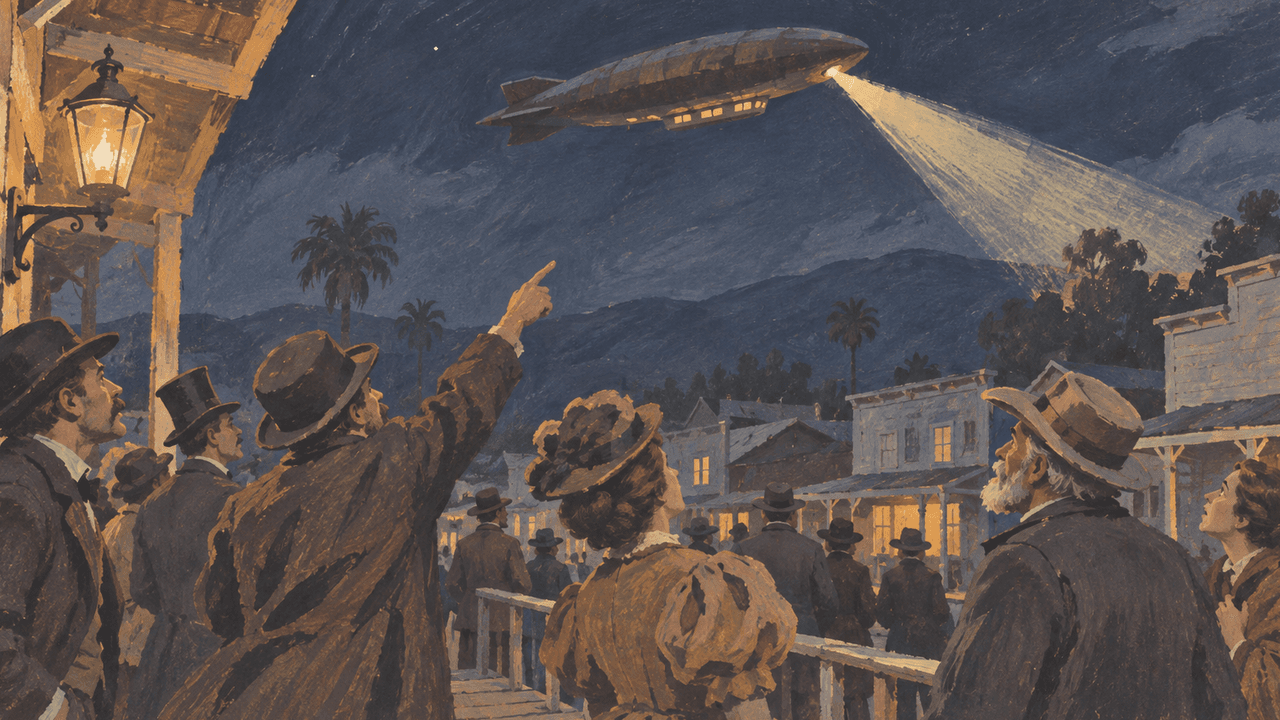
The first documented account comes from Robert Reed Ellison, a young cowhand driving cattle through Paisano Pass in 1883. Spotting flickering lights in the distance, Ellison assumed he was seeing Apache campfires — a reasonable concern in a region still occasionally subject to raiding. When he and other cowboys rode out the following morning to investigate, they found no ashes, no footprints, and no evidence of any fire whatsoever. Other settlers confirmed they had seen the same lights, and that searches had invariably come up empty.
The first report from additional named witnesses comes from 1885, when Joe and Sally Humphreys documented their own sighting. Their account noted the characteristic behavior that would be repeated by observers across the following century and a half: lights appearing to the south toward what is now called Mitchell Flat, moving unpredictably, sometimes splitting into multiple points, sometimes merging, sometimes vanishing and reappearing in a different location.
During the summer of 1919, a party of cowboys reportedly spent several days riding across the desert floor attempting to close in on the lights. Each approach caused the lights to retreat or disappear. The party found nothing — no tracks, no sign of habitation in the areas where the lights had appeared to originate.
The lights were investigated by military personnel during both World War I and World War II, when Army Air Corps pilots and ground crews stationed at what would become Marfa Army Air Field searched from the air and ground for a conventional explanation. Those investigations, conducted with the discipline of military reconnaissance, produced no findings. Pilots reported seeing the lights clearly from altitude but could not locate any ground-based source.
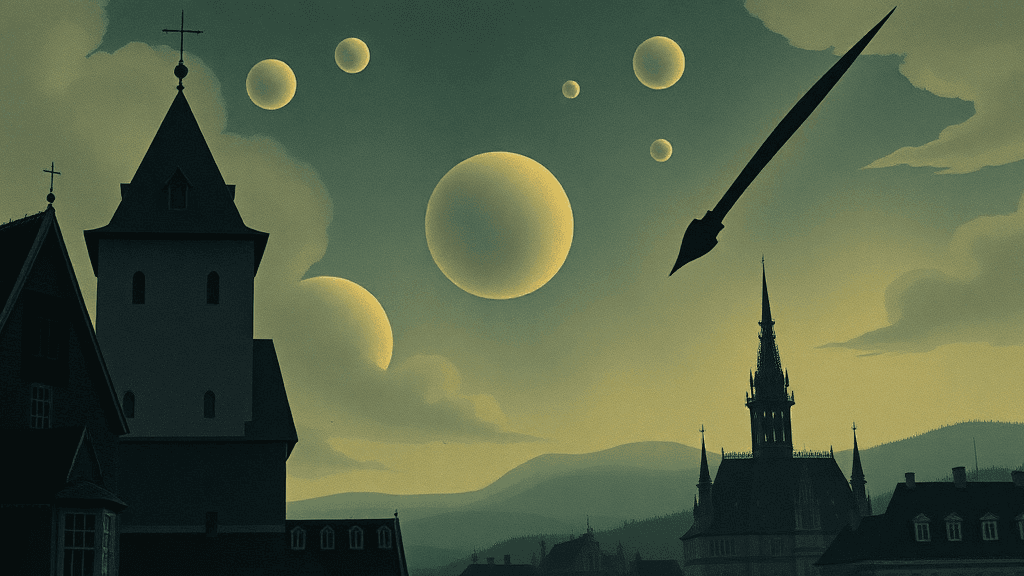
The phenomenon received its first national media exposure in a July 1957 article in Coronet magazine, which described the lights in terms that would become standardized in subsequent popular coverage: basketball-sized luminous orbs in yellow, orange, white, red, and occasionally blue or green, appearing to hover or drift several miles to the south. From that point, the Marfa Lights entered the broader American catalogue of unexplained phenomena.
Eyewitness descriptions across 140-plus years share several consistent features. The lights are most frequently seen on clear, dry nights — often moonless. They appear singly or in clusters, at heights ranging from ground level to several hundred feet. They change intensity, sometimes flaring brightly before dimming. They move laterally, vertically, and in arcing patterns that strike observers as non-mechanical. Some witnesses describe the lights as appearing to respond to human presence — retreating from approach, or seeming to react to activity at the viewing area. A locally famous account involves Mrs. W. T. Giddings, a longtime Presidio County resident, who described a family oral tradition in which her father was guided to safety during a blizzard by a light that appeared to lead him toward a cave — a story representing the benevolent interpretation many longtime local residents hold.
Investigation
The first systematic scientific investigation did not occur until the late twentieth century, despite more than a century of eyewitness testimony. Academic attention accelerated after the phenomenon became widely publicized through television and print media in the 1980s.
The most methodologically rigorous early study was conducted in 2004 by a team of physics students from the University of Texas at Dallas. Working over four consecutive nights, the team deployed infrared cameras, traffic-counting equipment, and synchronized timing systems to correlate observed lights with known traffic on U.S. Highway 67, which runs southwest of Marfa toward Presidio. Their conclusion was direct: every light observed during the study period from the southwest viewable from the platform could be attributed to automobile headlights distorted by atmospheric refraction. They demonstrated this by having a colleague flash headlights in a specific pattern from a parked car on the highway; the pattern was identifiable from the viewing area miles away, appearing as a slowly bobbing, color-shifting light of apparently anomalous character.
The UT Dallas team was careful to note a critical limitation: their four-night study covered only lights visible from the viewing platform toward the southwest — the direction in which U.S. 67 lies. They explicitly did not claim to have explained all Marfa Lights reports.
A larger investigation followed in May 2008, when researchers from Texas State University–San Marcos spent twenty nights at the viewing station using spectroscopic equipment calibrated to analyze the spectral composition of light sources at distance. Their data showed that lights recorded during the observation period could, in nearly every case, be explained as automobile headlights or small fires. However, the TSU team also reported a subset of observations displaying behavior not easily attributable to traffic: rapid lateral movement, abrupt disappearance and reappearance, and luminous splitting events. These could not be definitively linked to any known source. The researchers concluded that while the majority of Marfa Lights reports involve misidentified traffic, a residual phenomenon warranted further study.
Atmospheric scientists have proposed that the dominant mechanism is a form of superior mirage produced by a temperature inversion layer. In the Trans-Pecos basin, warm desert air frequently pools near the surface while cooler air sits above it. Light traveling through this stratified atmosphere is bent — refracted — upward or laterally, so that a headlight on U.S. 67 can appear to float in the air, shift color through dispersion, and move as the vehicle rounds curves miles away. This effect, sometimes called a Fata Morgana, is well-documented in desert and coastal environments worldwide and is particularly pronounced in flat basins with distant mountain backdrops — precisely the geography of Mitchell Flat.
Other proposed explanations include:
- Swamp gas: phosphine and methane from petroleum seeps self-igniting on contact with oxygen. The arid Chihuahuan Desert is not a typical swamp-gas environment, and no significant seep zones have been identified in Mitchell Flat.
- Piezoelectric earthlights: tectonic stress on quartz-bearing rocks releasing electrical charge. Researcher Paul Devereux has argued that such phenomena may account for anomalous lights at several global sites including Hessdalen, Norway and Brown Mountain, North Carolina.
- Moonlight on mica veins: an older local explanation, now generally considered insufficient to account for observed brightness and mobility.
- Ball lightning: rare and poorly understood; typically associated with thunderstorm conditions, which are inconsistent with most clear-night Marfa observations.
- Electrostatic discharge: related to piezoelectric hypotheses but distinct in mechanism.
The case for / against
The case for a genuinely anomalous residual phenomenon rests on several points. Most compellingly, the eyewitness record extends back to 1883 — decades before automobile headlights existed as a factor and many years before U.S. 67 was constructed. Whatever Ellison and the nineteenth-century cattle ranchers observed cannot be attributed to traffic on a road that did not yet exist. Even the most thorough modern investigations — the UT Dallas and Texas State studies — declined to assert that all Marfa Lights reports are explained. The TSU spectroscopic data contained observations the researchers could not account for. Some reported behaviors — splitting, apparent pursuit-avoidance of observers, abrupt reappearance at a new position — are not easily modeled by temperature-inversion refraction alone. The military's failure to identify a source during two world wars, when there was genuine operational motivation to investigate unknown lights in the sky, adds a secondary historical thread.
The case against anomalous explanation is also substantial. U.S. 67 has existed for most of the twentieth century, providing a plausible and experimentally verified explanation for the majority of modern sightings. No physical trace — residue, electromagnetic signature, radiation — has ever been recovered from a Marfa Light. No photograph unambiguously shows anything beyond a distant point of light. The historical record is entirely anecdotal, and the consistency of descriptions across 140 years could reflect cultural transmission of expectation as readily as consistent observation of a single phenomenon. The geology of the region is interesting but not globally unique; comparable tectonic settings exist worldwide without generating equivalent persistent light reports.
The honest assessment is that Marfa Lights is a layered case: the majority of modern sightings are almost certainly misidentified traffic distorted by atmospheric optics, while a minority of observations — particularly those from the pre-automobile era and those recorded instrumentally in the 2008 TSU study — remain genuinely without explanation. "Unexplained" is not equivalent to "anomalous," but it is a legitimate classification in an era of incomplete investigation.
Cultural impact
The Marfa Lights occupy a singular position in American folklore precisely because they are ongoing and accessible. Unlike most UFO or paranormal claims tied to a specific incident, the lights can be seen — or at least sought — on any clear night by anyone willing to drive to Presidio County. This accessibility has made them a community identity marker for a region otherwise economically marginal. The lights appear on local business signage, merchandise, and official county tourism literature. They have been covered by the New York Times, National Geographic, Scientific American, and a long list of television programs ranging from cable paranormal documentaries to mainstream science series.
The town of Marfa itself underwent a remarkable cultural transformation beginning in the 1970s when minimalist sculptor Donald Judd relocated there and eventually installed permanent large-scale works at the Chinati Foundation. Marfa became, improbably, a destination for the international contemporary art world — and the Marfa Lights benefit from this cachet. They are presented not as tabloid curiosity but as part of a broader mystique that embraces West Texas strangeness as something worthy of contemplative attention.
Brown Mountain Lights in North Carolina offer the closest American parallel: lights reported for centuries, attributed to various sources, never definitively explained, and transformed into a local tourism asset. The comparison suggests that the social function of such phenomena — as a focus for community identity and a draw for visitors — may be as durable and significant as any underlying physical reality.
The lights have been cited in discussions of earthlights theory, tectonic strain theory, and atmospheric optics, making them a reference point in several distinct academic traditions, none of which has achieved consensus.
Current status
The Marfa Lights Viewing Area, maintained by the Texas Department of Transportation in partnership with local tourism bodies, sits approximately nine miles east of Marfa on U.S. Highway 90. Opened in 2003, it includes a paved parking area, interpretive signage, restrooms, and a low concrete observation platform oriented toward Mitchell Flat to the south. It is open nightly and free to access, drawing tens of thousands of visitors annually.
The lights continue to be reported consistently. Visitor accounts through 2025 describe the characteristic flickering, splitting, and color-shifting behavior — with skeptically minded observers attributing what they see to highway traffic and others insisting the behavior is too complex or rapid to be traffic-related. Both reactions appear regularly in travel reviews and shared accounts.
No new systematic scientific investigation has been published since the 2008 Texas State University spectroscopy study. Researchers interested in the residual unexplained component have advocated for long-term, multi-instrument monitoring stations that could simultaneously record atmospheric conditions, seismic activity, electromagnetic fields, and optical data across many hundreds of nights. No such program has been funded or implemented. The Chinati Mountains still rise against the southern sky after dark, the desert floor still produces lights that move and shimmer in ways that resist easy dismissal, and the question of what exactly Ellison saw in 1883 remains — more than 140 years on — without a definitive answer.
Witnesses
Robert Reed Ellison (1883): cowhand driving cattle through Paisano Pass; first documented observer. Joe and Sally Humphreys (1885): earliest additional named witnesses on record. Unnamed cowboys (summer 1919): spent days riding to locate source without success. U.S. Army Air Corps personnel (WWI and WWII): investigated from air and ground at Marfa Army Air Field; no findings reached. Mrs. W. T. Giddings: described a family oral history of a light guiding her father to shelter during a blizzard. Hundreds of additional civilian observers documented in local and national press since the 1957 Coronet article.
Evidence
No physical trace has ever been recovered from a Marfa Light. No photographs exist that show more than distant points of light. 2004 UT Dallas study: four-night instrumental study using infrared cameras and traffic-counting correlated lights visible from the southwest of the viewing platform with automobile headlights on U.S. 67; demonstrated experimentally by flashing headlights in pattern from a parked car. 2008 Texas State University study: twenty-night spectroscopic analysis; majority of observed lights explained as headlights or fires; a subset of observations could not be attributed to known sources. Atmospheric modeling supports superior-mirage / temperature-inversion explanation for most headlight-correlated reports. The pre-automobile historical record (1883–early 20th century) cannot be attributed to traffic.
Filed under
Watch
Marfa Lights 5/18/13
The Mysterious Lights of Marfa, Texas.
The Marfa Lights: Texas’ Greatest Unsolved Mystery
The Proof Is Out There: Mysterious Orbs in Texas Could Be Supernatural (Season 3) | History
Can the Marfa Mystery Lights be explained?
Where this entry came from
ProvenanceAgent indexedUpdated 5mo ago9 sources
Drafted by the archive's AI research agent from the sources below; corrections from readers are reviewed and folded in.
- First indexed
- 29 MAY 26 // 07:18Z
- Last updated
- 30 MAY 26 // 16:49Z
- Marfa Lights, Texas State Historical Association, Handbook of Texas Online
- Marfa lights, Wikipedia
- What Are the Marfa Lights?, Live Science
- Do Marfa Lights Come From UFOs, Cars, the Military or Ghosts?, HowStuffWorks Science
- What Marfa Lights Probably Aren't, ResearchGate
- Mystery of the Marfa Lights: UFOs or Natural Phenomenon?, Earthly Mission
- Exploration Mysteries: The Marfa Lights, ExplorersWeb
- Hessdalen lights, Wikipedia
- Brown Mountain lights, Wikipedia
Notes
- Marfa Lights, Texas State Historical Association, Handbook of Texas Online
- Marfa lights, Wikipedia
- What Are the Marfa Lights?, Live Science
- Do Marfa Lights Come From UFOs, Cars, the Military or Ghosts?, HowStuffWorks Science
- What Marfa Lights Probably Aren't, ResearchGate
- Mystery of the Marfa Lights: UFOs or Natural Phenomenon?, Earthly Mission
- Exploration Mysteries: The Marfa Lights, ExplorersWeb
- Hessdalen lights, Wikipedia
- Brown Mountain lights, Wikipedia
Also available
The Marfa Lights - A UFO Disclosure with Serena DC
Investigative filmmaker Serena DC and her team of ufologists travel to Marfa, Texas to investigate mysterious nocturnal lights. Using cutting-edge technology and CE5 contact protocols, they attempt to determine whether the lights are extraterrestrial craft or interdimensional phenomena.
Buying through these links supports the library. We may earn a commission.