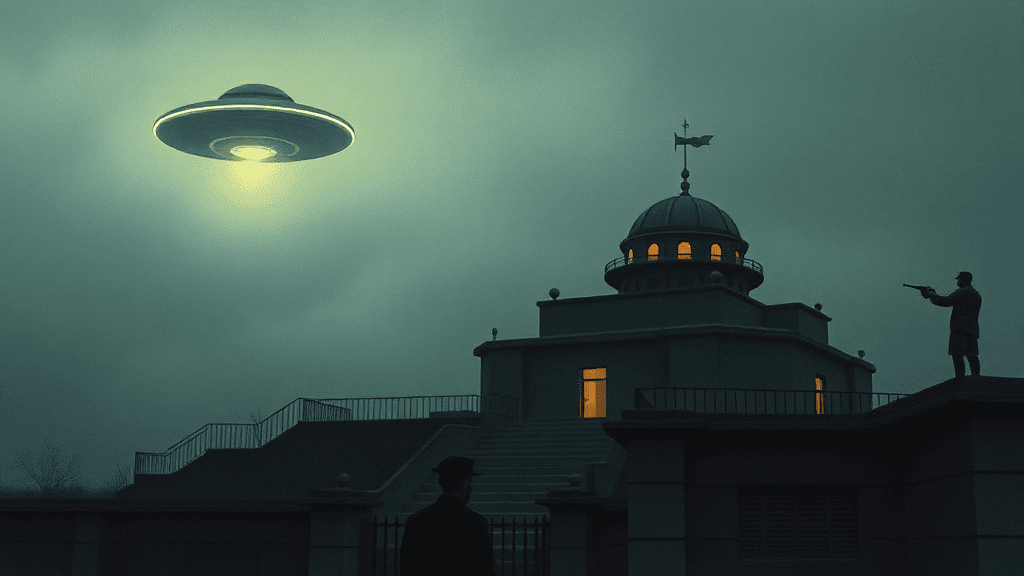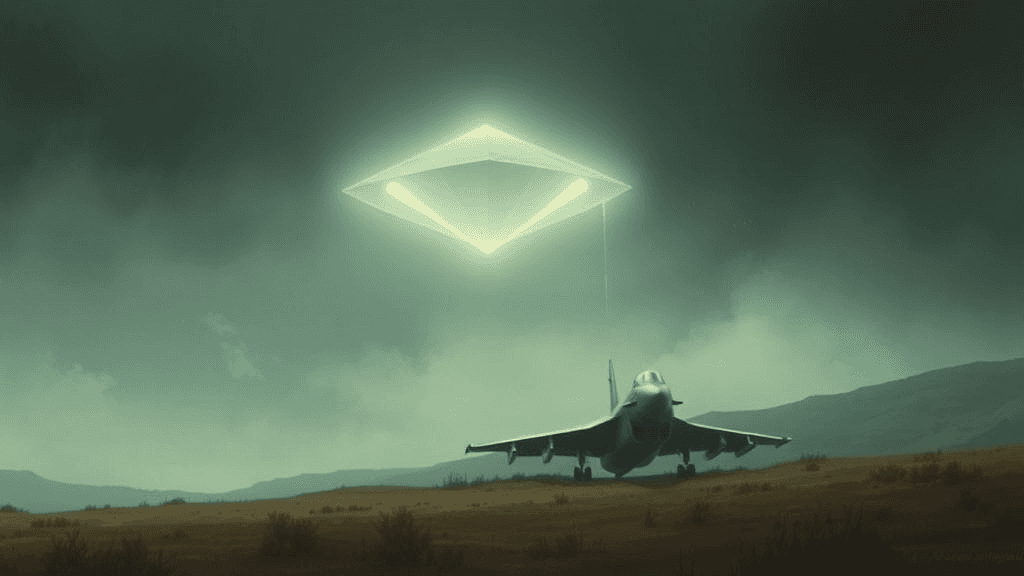
The UFO Library: Humanoid encounter
The Varginha Incident
In January 1996, three young women in Varginha, Brazil, reported encountering a terrified, foul-smelling humanoid creature in a vacant lot; within weeks a military police officer who allegedly captured the being was dead, and the case became South America's most debated UFO incident.
Background
Varginha is a prosperous mid-sized city in the southern highlands of Minas Gerais, Brazil, historically known for its role in the country's coffee trade. In January 1996 it had a population of roughly 110,000 and little reason to attract international attention. That changed in the space of a single afternoon — and the reverberations have not stopped since.
The events that would become known as the Varginha Incident unfolded against a broader backdrop of vigorous UFO activity in Brazil. The country has a long and documented history of aerial phenomena reports, official government attention to the subject (the Brazilian Air Force maintained a formal reporting protocol called Tráfego Hotel for decades), and a civilian UFO research community that was more organised than its North American counterpart in several respects. NORAD reportedly notified the Brazilian Air Defense Command on the night of January 12–13, 1996, that an unidentified object of unusual trajectory was entering South American airspace — a detail repeated by multiple researchers though not officially confirmed in released documents.
On the morning of January 13, 1996, a week before the main incident, Carlos de Souza — an ultralight pilot and geography teacher — reported observing a large, damaged cigar-shaped object descending toward the Varginha region, trailing vapor or smoke. His testimony established a pre-event context that civilian investigators would later argue pointed to a crash or controlled descent in the surrounding countryside.
In the days that followed, residents of suburban Varginha reportedly noticed increased military vehicle traffic on roads leading toward the Serra da Canastra hills south of the city. Fire department personnel, working early on the morning of January 20, would later give testimony — recorded in the Brazilian Military Police Inquiry launched a year later — that they had been called to assist in the recovery of an injured creature in a wooded gully before dawn, and that military personnel had arrived to take custody shortly after.
Events
The incident that anchors the entire case occurred at approximately 15:30 on the afternoon of January 20, 1996, on a vacant lot near the Dr. Benevenuto Braz Vieira street in the Jardim Andere neighbourhood of Varginha. Three young women — sisters Liliane Silva (16) and Valquíria Fátima Silva (14), together with their friend Kátia Andrade Xavier (22) — were crossing the lot on their way home when they came upon a being crouching against a low wall.
All three described it consistently: a bipedal creature roughly 1.2 to 1.5 metres (four to five feet) tall with dark brown, oily, hairless skin stretched tightly over a thin frame; enormous red eyes that seemed to glow; a disproportionately large head crowned with three rounded protuberances; small hands featuring three elongated fingers; and feet that formed a pronounced V-shape. The creature appeared sick or frightened — trembling, hunched, making no threatening movement — and emitted a powerful, nauseating odour variously compared to ammonia or rotting eggs. Liliane later said it looked "sad." All three women fled in panic, and Liliane's mother, Luíza Helena, returned to the spot to verify their account. She found nothing, but noted a persistent foul smell.
Word spread rapidly through the neighbourhood. Local ufologist and engineer Vitório Pacaccini learned of the sighting the same evening and began collecting testimony. Military Police vehicles were observed in the area later that afternoon, and by evening multiple neighbourhood residents reported seeing uniformed personnel searching the lot and nearby drainage channels.
The most dramatic subsidiary claim concerns Military Police Corporal Marco Eli Chereze, 23 years old. According to accounts compiled by investigators, Chereze and a partner encountered a creature on a nearby road — possibly the same individual or a second being — and Chereze physically subdued it with his bare hands and transported it to the Regional Hospital (Hospital Regional de Varginha). He reportedly did so without protective equipment. Within days he complained of severe pain and swelling in his right armpit; by February 12 he had been hospitalised with a virulent abscess. He died on February 15, 1996, from generalised sepsis and pneumonia, twenty-six days after the alleged encounter. He was twenty-three years old.
His family — particularly his sister Marta Tavares and widow Valéria Chereze — maintain that his death was directly caused by exposure to the creature, possibly via an unknown pathogen. When Valéria obtained her husband's hospital records, she found pages missing. The military attributed Chereze's death to a pre-existing vulnerability and a hospital-acquired infection. The official cause of death listed pneumonia.
A military convoy was reported leaving the Varginha area on January 23, three days after the main sighting, transporting sealed containers to the Escola de Sargentos das Armas (ESA) army base in nearby Três Corações. Witnesses claimed the containers were transferred onward — ultimately, in some accounts, to a U.S. Air Force cargo aircraft at Viracopos Airport in Campinas. These transfer claims have never been independently documented.
Meanwhile, two animals at the Varginha Municipal Zoo — an elephant and a lion — reportedly died in the days immediately following the incidents, though no verified link to any creature capture has been established.
Investigation
The civilian investigation was led principally by two Brazilians: Ubirajara Franco Rodrigues, a law professor who applied legal methodology to witness evaluation, and Vitório Pacaccini, an Italian-Brazilian engineer who relocated to Varginha for approximately two years to conduct a full-time inquiry. Rodrigues eventually compiled over fifteen video-recorded testimonies from civilian and military sources. Their work was published in Incidente em Varginha (1996, Pacaccini and Maxs Portes) and O Caso Varginha (2001, Rodrigues).
The Brazilian military's formal response came in two stages. An internal inquiry was conducted in May 1996. A more extensive formal Military Police Inquiry (Inquérito Policial Militar, IPM) ran from January to May 1997, producing nine volumes of documentation that preserved accounts from nurses, fire department personnel, zoo staff, and military officers. The IPM's conclusion: allegations of extraterrestrial contact were "too implausible to inspire public credibility." Military prosecutors archived the case without charges.
The official explanation for the creature sighting was published in a 2010 Brazilian Army document identifying the being the three women had seen as Luiz Antônio de Paula, nicknamed "Mudinho," a homeless man with apparent mental disabilities who sometimes wandered the neighbourhood covered in mud. Army investigators argued his unusual appearance and behaviour could account for the description. The explanation satisfied almost no researchers who had studied the case — the detailed and consistent description given by the three witnesses (who had never seen Mudinho before) was considered difficult to reconcile with a muddy human figure.
Brazil's partial declassification of military UFO files in the 2000s — part of an initiative supported by civilian lobbying and the journalist Ademar José Gevaerd of Revista UFO — did not produce smoking-gun documents. Released files confirmed the existence of the Tráfego Hotel reporting system and documented a 1971 military intelligence report noting UFO activity over the same Varginha locations twenty-five years earlier, but contained no authenticated photographs, no biological analysis, and no confirmation of extraterrestrial contact. Notably, despite persistent claims that soldiers had taken images at the scene, no photographs appear in the official record; one soldier allegedly attempted to sell photographs but they were confiscated.
The most significant new testimony arrived three decades later. In January 2026, at a National Press Club event in Washington, D.C., Dr. Italo Venturelli — who had served as head of neurosurgery at the Regional Hospital in Varginha — publicly stated that on January 20, 1996, a colleague showed him a brief video of an unusual patient and then led him to examine the entity directly. He described a four-minute encounter with a conscious, calm being resembling a child in proportion but with a large teardrop-shaped head, lilac-coloured eyes, a thin chest, and hands with three fingers and an opposing thumb. He reported experiencing "immense telepathic pressure" and a sense that the entity was aware of its surroundings and wished to leave. "The truth is, I saw the being," he stated. "It was not a being from our planet." Venturelli — who had remained silent for twenty-nine years — said a near-fatal heart attack had compelled him to come forward. He was accompanied at the press conference by retired U.S. Army Colonel Fred Clausen, who provided supporting testimony about alleged American involvement in the transfer of recovered materials.
The 2026 conference drew U.S. Congressional representatives Anna Paulina Luna and Tim Burchett, and investigative journalists Leslie Kean and Ralph Blumenthal, signalling the mainstreaming of serious attention to the case in both countries.
The Case For and Against
The case for genuine anomaly rests on several pillars: the internal consistency of the three primary witnesses' accounts across nearly three decades; the testimony of multiple independent corroborating witnesses (fire department personnel, hospital workers, nurses) collected in the IPM and by civilian researchers; the suspicious circumstances of Marco Chereze's death and the missing pages in his medical records; the forthcoming testimony of Dr. Venturelli, a credentialed physician with no apparent motive to fabricate; declassified documents confirming prior military UFO monitoring in the same locale; and the involvement of credentialed investigators including forensic pathologist Dr. Armando Fortunato, who described unusual bacterial behaviour in samples associated with the case.
The case against is also substantial. The sole official identification — "Mudinho" — remains contested but points to how easily nocturnal or semi-rural misidentification can occur. No physical evidence from the alleged crash or creature capture has ever been independently verified: no metallic debris, no biological specimens, no authenticated photographs. The transfer-to-America claims rest entirely on word-of-mouth testimony collected years after the fact. Even the primary civilian investigator, Ubirajara Rodrigues, eventually acknowledged: "There is no proof that an extraterrestrial being was captured in Varginha." Sceptics note that high media interest in a story spreads and amplifies claims, and that Brazilian print and television coverage of the incident began within days and was intense, potentially influencing later witness memories. The late arrival of Dr. Venturelli's testimony — disclosed publicly thirty years after the event, following a life-threatening illness — also raises questions that are hard to fully resolve.
The forensic pathologist connection and the Chereze death remain the hardest elements for the purely prosaic explanation to absorb. A young, apparently healthy soldier dying within a month of an alleged contact, with redacted records and a family denied full information, does not fit neatly into any tidy dismissal.
Cultural Impact
Varginha responded to its sudden fame in a fashion strikingly similar to Roswell, New Mexico. The city leaned into the mythology: a large fibreglass alien sculpture — nicknamed ET de Varginha — was erected at a prominent road intersection; the local water tower was painted to resemble a flying saucer; shops sell alien-themed merchandise; and the city actively markets itself as the UFO capital of Brazil. This commercial embrace is both a genuine expression of local pride and, critics note, a complicating factor in evaluating testimony from an environment saturated with the story.
The incident's impact on Brazilian ufology was profound and lasting. It galvanised civilian research organisations, most notably journalist Ademar José Gevaerd's Revista UFO, who would become one of Brazil's most prominent UAP advocates and a key liaison to both military and government sources in subsequent declassification campaigns.
Internationally, James Fox's 2022 documentary Moment of Contact — a detailed feature-length examination of the case — brought the incident to a global streaming audience. A follow-up, Moment of Contact: New Revelations of Alien Encounters (2025), incorporated Venturelli's testimony and details from additional witnesses. The case has since been cited in discussions before the U.S. Senate Armed Services Committee during UAP hearings and referenced in briefings to members of Congress, representing an unusual level of political attention for a foreign incident.
The comparison to Roswell is instructive but imperfect. Like Roswell, Varginha involves claimed military recovery of anomalous material, official denial, witness deaths under disputed circumstances, and a community that has found economic identity in the story. Unlike Roswell, the core civilian witnesses are still alive, their accounts unchanged after thirty years, and new credentialed witnesses continue to emerge — making it, in some ways, a more dynamic and evolving case.
Current Status
As of 2026, the Varginha Incident stands at a genuinely unresolved crossroads. The three primary witnesses — Liliane Silva, Valquíria Silva, and Kátia Andrade Xavier — have maintained their accounts consistently throughout adulthood and have not retracted or significantly altered their descriptions. Dr. Italo Venturelli's January 2026 testimony at the National Press Club introduced a significant new witness voice at the highest-profile moment in UAP disclosure history.
Brazil's ongoing declassification of military records has produced rich contextual documentation but no definitive confirmation. The Brazilian military's formal conclusion — misidentification of a homeless man, routine troop movements, natural death of a young soldier — satisfies officials and hardened sceptics, but leaves a residue of anomaly that trained investigators have consistently found difficult to explain away entirely.
The case is now part of active U.S. Congressional UAP discussion. If Brazil and the United States were ever to engage in joint official disclosure or record-sharing on UAP incidents, the Varginha Incident would be at the top of any list. Until then, it occupies its unique position: the most documented, most witnessed, and most politically connected humanoid encounter case in the history of South American UFO research.
Witnesses
Primary witnesses:
- Liliane Silva (16 at time of incident) — elder of the Silva sisters; primary describer of the creature's features and emotional state
- Valquíria Fátima Silva (14) — younger sister; consistent corroborator of the encounter
- Kátia Andrade Xavier (22) — friend and third witness; accounts aligned with the sisters' across decades
- Luíza Helena Silva — mother of Liliane and Valquíria; returned to the site shortly after and confirmed the odour
Military and professional witnesses:
- Marco Eli Chereze — Military Police Corporal, 23, alleged to have physically captured a creature on January 20; died February 15, 1996 from sepsis
- Dr. Italo Venturelli — Head of Neurosurgery, Regional Hospital Varginha; came forward in January 2026 describing a four-minute encounter with a living entity
- Dr. Armando Fortunato — Forensic pathologist who examined samples associated with the case; awarded Honorary Citizen of Varginha in 2023
- Fire department personnel — Multiple officers gave testimony in the 1997 Military Police Inquiry describing an early-morning recovery operation before the afternoon sighting
Aerial precursor:
- Carlos de Souza — Ultralight pilot and geography teacher; reported observing a large cigar-shaped damaged craft descending toward Varginha on January 13, 1996
Evidence
Witness testimony: Three primary civilian witnesses have maintained consistent accounts for nearly thirty years. Over fifteen additional video-recorded testimonies were compiled by civilian investigators Rodrigues and Pacaccini from military, medical, and civilian sources.
Military Police Inquiry (IPM, 1997): Nine volumes of official documentation preserving accounts from nurses, fire department personnel, zoo staff, and military officers — the most significant formal record of the investigation.
Declassified military documents: Released Brazilian military files confirmed the existence of the Tráfego Hotel UFO reporting system and a 1971 military intelligence report noting UFO activity over the same Varginha locations twenty-five years earlier.
Marco Chereze medical records: Incomplete records obtained by the widow Valéria Chereze; missing pages have never been accounted for by military authorities.
Dr. Venturelli testimony (2026): Sworn statement at the National Press Club by a credentialed neurosurgeon describing direct four-minute contact with a living, conscious non-human entity at Regional Hospital.
Physical evidence: absent. No authenticated photographs, no biological specimens, no recovered debris have been independently verified despite persistent claims that such material exists.
Filed under
Watch
Varginha UFO Crash: Alien Contact, Government Denial and Coverup
Brazilian Alien Sighting | National Geographic
Basement #005: James Fox | UFO Disclosure, Varginha, and the Captured Creature
The Varginha Incident - Vicious Cycles
New Analysis of "Alien" Bacteria that Killed Varginha UFO Witness STUNS Doctors | James Fox
Where this entry came from
ProvenanceAgent indexedUpdated 6mo ago10 sources
Drafted by the archive's AI research agent from the sources below; corrections from readers are reviewed and folded in.
- First indexed
- 24 APR 26 // 22:45Z
- Last updated
- 25 APR 26 // 22:00Z
- Varginha UFO incident, Wikipedia
- Moment of Contact (2022), James Fox (dir.), IMDb
- Inside The Varginha UFO Incident, When Multiple People Reported Witnessing Extraterrestrial Phenomena In Brazil, All That's Interesting
- Varginha UFO Incident: Creatures, Cover-Up & Witnesses, ParaRational
- Landmark Brazilian UFO Case Reaches Capitol Hill as Varginha Incident Turns 30, Leslie Kean / Ralph Blumenthal, The Debrief
- The Varginha UFO Incident: Brazil's Roswell and the Neurosurgeon Who Claims He Saw a Living Alien, UAP Digest
- Inside Brazil's UFO Files: What Declassified Military Documents Reveal About the Varginha Incident, Réveil
- Witnesses describe 1996 Brazil UFO encounter, NewsNation
- UFO Crash in Brazil (Varginha Incident), Hangar 1 Publishing
- Incident in Varginha: Space Creatures in the South of Minas, Vitório Pacaccini, Amazon
Notes
- Varginha UFO incident, Wikipedia
- Moment of Contact (2022), James Fox (dir.), IMDb
- Inside The Varginha UFO Incident, When Multiple People Reported Witnessing Extraterrestrial Phenomena In Brazil, All That's Interesting
- Varginha UFO Incident: Creatures, Cover-Up & Witnesses, ParaRational
- Landmark Brazilian UFO Case Reaches Capitol Hill as Varginha Incident Turns 30, Leslie Kean / Ralph Blumenthal, The Debrief
- The Varginha UFO Incident: Brazil's Roswell and the Neurosurgeon Who Claims He Saw a Living Alien, UAP Digest
- Inside Brazil's UFO Files: What Declassified Military Documents Reveal About the Varginha Incident, Réveil
- Witnesses describe 1996 Brazil UFO encounter, NewsNation
- UFO Crash in Brazil (Varginha Incident), Hangar 1 Publishing
- Incident in Varginha: Space Creatures in the South of Minas, Vitório Pacaccini, Amazon
Also available
Moment of Contact
Exploration of the 1996 Varginha, Brazil UFO incident featuring eyewitness testimonies and expert analysis of reported alien encounters and a UFO crash.
Moment of Contact: New Revelations of Alien Encounters
Expanded version of Moment of Contact with James Fox returning to Brazil following congressional hearings. Features new interviews with former police chief, pathologists, and witnesses to the 1996 Varginha UFO incident.
O Mistério de Varginha
Series. Three-episode Brazilian documentary co-production bringing together unpublished testimonies, documents, and historical files about the 1996 Varginha UFO incident. Features exclusive material never before broadcast.
Buying through these links supports the library. We may earn a commission.