The UFO Library: Contact
Adamski Desert Encounter (1952)
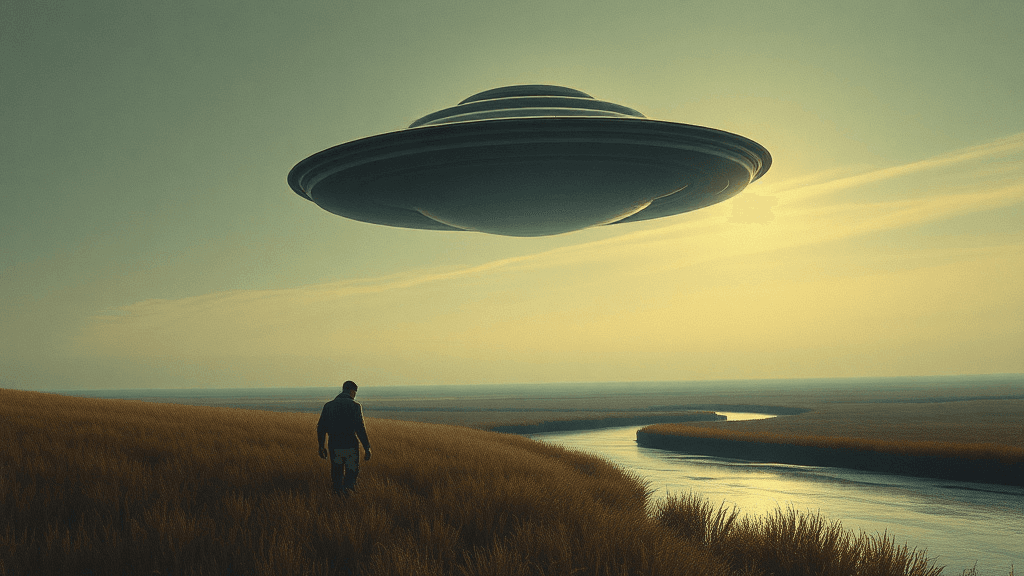
On 20 November 1952 George Adamski told companions he met a human-looking visitor from Venus, 'Orthon', beside a landed craft in the California desert, an event that launched the modern contactee movement.
The claim
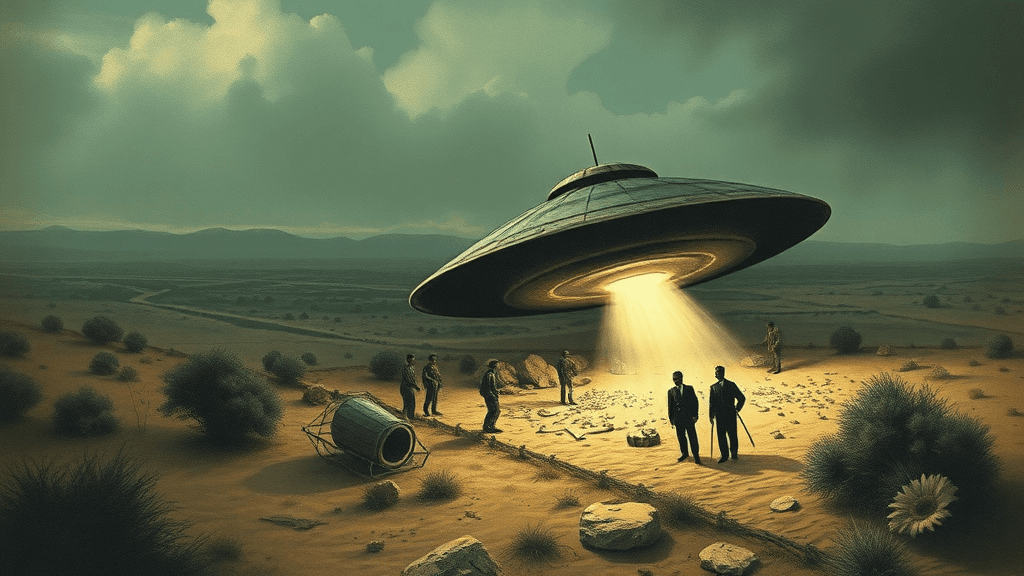
On 20 November 1952, around midday, George Adamski, a Polish-born California restaurateur and self-styled UFO investigator who lived near Palomar Mountain, drove into the desert near Desert Center, California with a small group of companions. According to Adamski, he left them to approach a landed craft and met a man-like being he called Orthon, whom he identified as a Venusian. Adamski said the two communicated by telepathy and hand signals, and that the visitor warned of nuclear danger and spoke of a brotherhood of 'space people.' Adamski returned to the group, and several supporters later signed affidavits attesting to the account.
The story is documented at length in HowStuffWorks' overview, which notes that Adamski's secretary, Lucy McGinnis, drove him to the site and that the group included Alice Wells, Alfred and Betty Bailey, and George and Betty Hunt Williamson.
What the companions reportedly saw
This is where accounts diverge. Adamski's version describes a close encounter. The companions' versions, as summarized by Wikipedia's entry on George Hunt Williamson, are much more modest: they saw Adamski walk over a low hill, and when he came back about an hour later he gave a preliminary account that was later greatly expanded for publication. Skeptical summaries put the distance at roughly 100 to 200 yards, and some accounts say the companions saw only Adamski talking with a distant figure.
The sources also disagree on the total number of witnesses (four in some accounts, six in others), so treat any exact figure with caution.
The book and the movement
The encounter was written up in Flying Saucers Have Landed (1953), co-authored with the British writer Desmond Leslie, which some references date to 1954. The book sold well, and by 1960 Adamski's first two books had reportedly sold about 200,000 copies combined. The Orthon narrative, with its detailed description of a shoulder-length, brown-haired human about 5'6" tall, became a template for later contactee accounts.
The event also gave Adamski a platform for a series of photographs of 'scoutcraft.' Skeptics, including astronomer J. Allen Hynek, dismissed the photographs as crude fakes, and the UT Austin 'Profiles in Pseudoscience' page treats Adamski as a textbook case of pseudoscientific claim-making. One of Adamski's former associates, Jerrold Baker, later said he had seen the model used for the photographs; that account is secondhand and should be weighed accordingly.
Assessment
There is no independent evidence that anything unusual happened at Desert Center on that day beyond Adamski's own testimony and his companions' affidavits, which were produced after the event and reflect his later narrative. The fair summary is that the 1952 encounter is a well-documented claim with a traceable publication history, not a documented physical event. Its significance is cultural: it set the template for the contactee genre, which remains one of the most durable strands of UFO belief.
Legacy
Adamski's Desert Center story preceded the later abduction literature by more than a decade. It shaped the expectation that visitors would be benevolent, human-looking, and eager to deliver messages, in contrast to the grey-type beings that dominate later reports. Writers in the contactee tradition, from George Van Tassel to later channelers, drew on the Adamski template, and the 1952 meeting remains the starting point for most histories of the genre.
Witnesses
Adamski's companions, as named in most accounts: Lucy McGinnis (his secretary, who drove him to the site), Alice Wells, Alfred and Betty Bailey, and George and Betty Hunt Williamson. Sources disagree on the total (four versus six). Their affidavits support Adamski's account; they are not independent verification of the event.
Evidence
Photographs attributed to the encounter were dismissed by skeptics as fakes; the model-based explanation is supported only by a secondhand claim from a former associate. No independent physical or documentary evidence of an event on that date has been established.
Filed under
Watch
Video captures flying objects that officials can't explain (2020)
A UFO sighting and the creatures seen by one man in the summer of 1945: "They walk like us"
George Adamski : le premier humain contacté par un OVNI ? - L'Heure H
UFO-യുടെ PHOTO എടുത്ത വ്യക്തി!👽 | 1952 GEORGE ADAMSKI UFO | Explained | AbhiYugam
Where this entry came from
ProvenanceAgent indexedUpdated 2w ago4 sources
Drafted by the archive's AI research agent from the sources below; corrections from readers are reviewed and folded in.
- First indexed
- 23 OCT 26 // 09:18Z
- Last updated
- 23 OCT 26 // 09:18Z
- George Adamski and the Space Brothers, HowStuffWorks
- George Hunt Williamson, Wikipedia
- George Adamski UFO alien photos, History.com
- Profiles in Pseudoscience: George Adamski, University of Texas at Austin
Notes
- George Adamski and the Space Brothers, HowStuffWorks
- George Hunt Williamson, Wikipedia
- George Adamski UFO alien photos, History.com
- Profiles in Pseudoscience: George Adamski, University of Texas at Austin
Also available
Top Secret UFO Projects: Declassified
Netflix docuseries on UFO history; its first episode, "Project Blue Book Unknown," retells George Adamski's November 1952 Desert Center encounter, including his claimed meeting with a Venusian named Orthon. The series covers many cases, so only one episode is about this incident.