The UFO Library: Military encounter
Tehran F-4 Phantom II Encounter
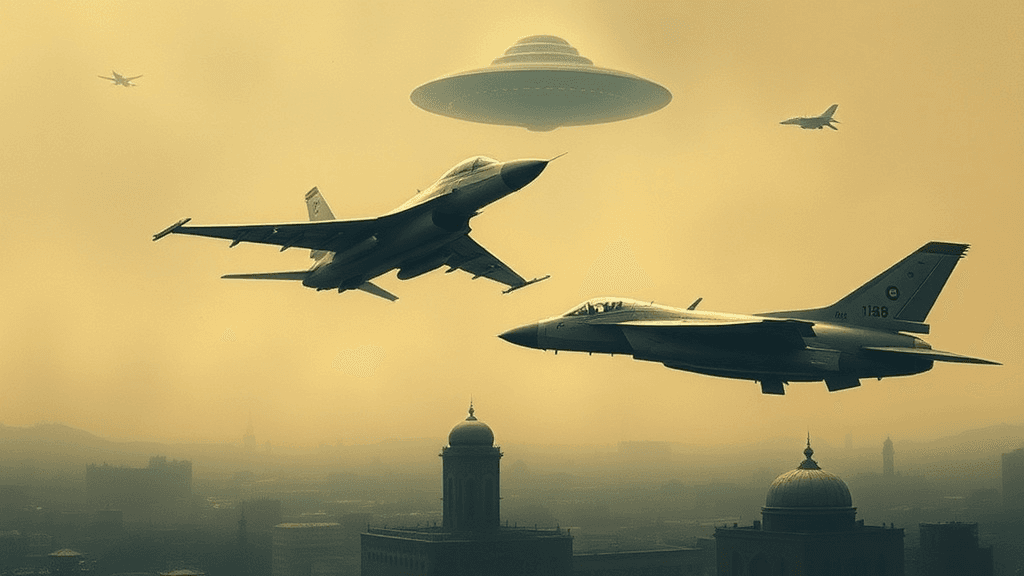
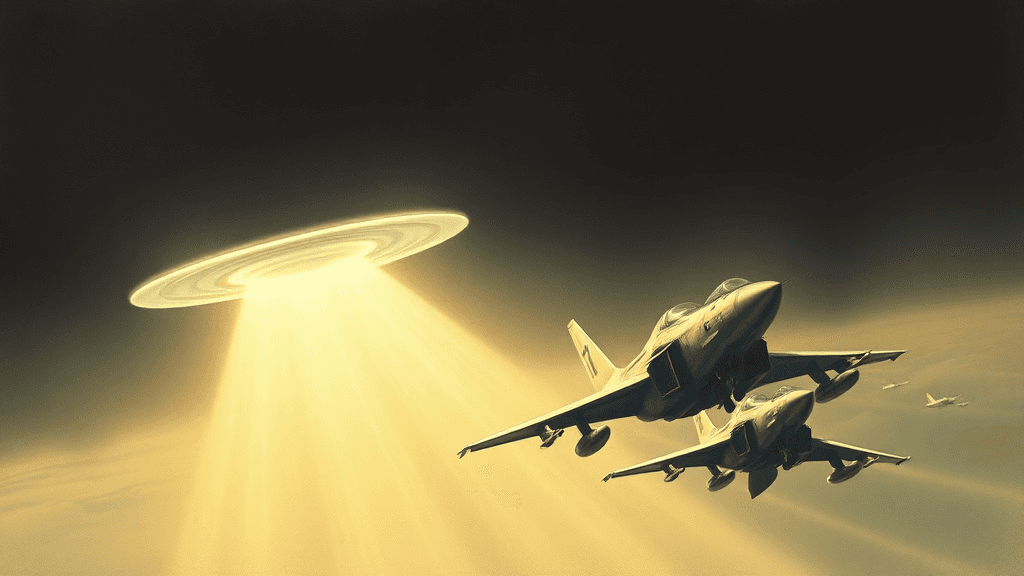
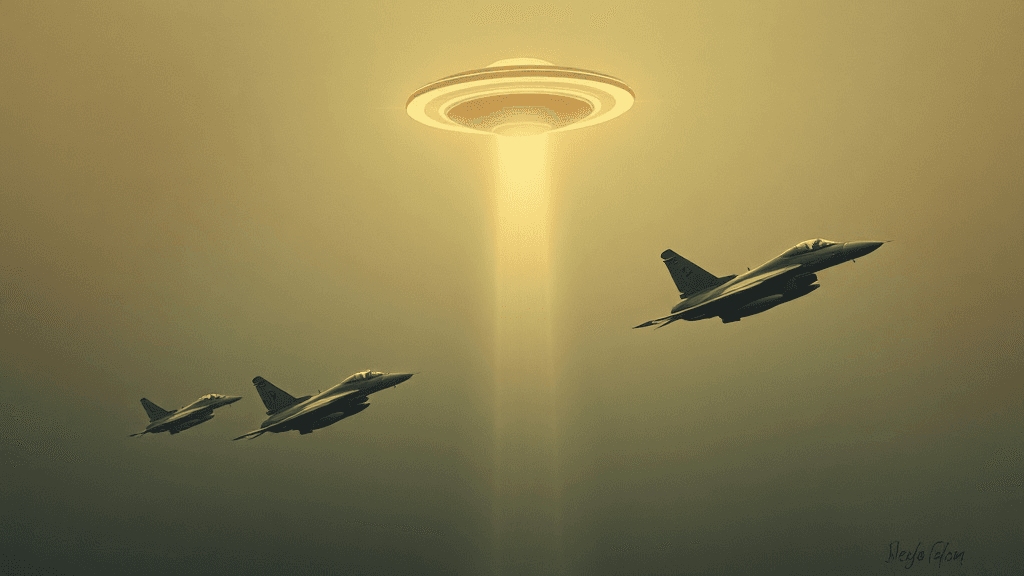
Iranian Air Force F-4 Phantom II interceptors engaged an unidentified luminous object with confirmed radar lock, experiencing simultaneous electromagnetic interference affecting all avionics and weapons systems.
Overview
On the night of September 18–19, 1976, one of the most credible military-verified UFO encounters occurred over Tehran, Iran. The incident involved civilian witnesses, air traffic control radar confirmation, and two Imperial Iranian Air Force F-4 Phantom II jet interceptors that experienced electromagnetic interference during attempted interception. The case generated immediate documentation to U.S. Defense Intelligence Agency (DIA) leadership and remains among the most rigorously documented military UAP encounters of the Cold War era.
Initial Civilian Reports
Beginning around 23:30 local time on September 18, Hossein Pirouzi, the senior air traffic controller at Mehrabad Airport in Tehran, received multiple calls from civilians reporting a shining object in the sky above the Shemiran district. Pirouzi himself observed the object and described it as rectangular in shape, with two large brilliant lights at either end and a smaller red light circling its center. The sightings were treated as a potential airspace incursion and immediately reported up the Iranian military chain of command.
Military Response and First Intercept
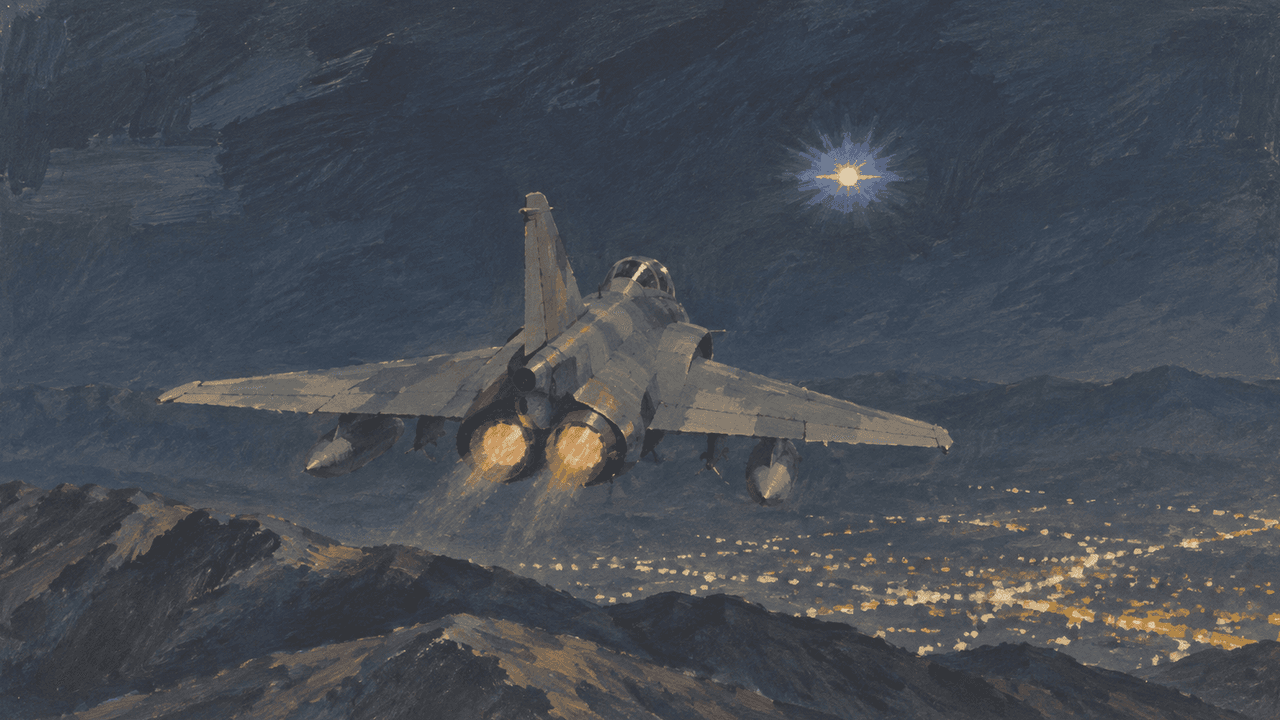
General Nader Yousefi, assistant deputy commander of operations for the Imperial Iranian Air Force (IIAF), initially dismissed the civilian reports. However, after personally observing the object from his own balcony, he authorized immediate scrambling of F-4 Phantom II interceptors from Shahrokhi Air Force Base. At 01:30 AM on September 19, Lieutenant Yaddi Nazeri and his backseat weapons officer were launched to investigate.
As Nazeri's jet approached to within approximately 25 nautical miles of the object, the aircraft experienced a sudden and total loss of all instrumentation and communications systems—both UHF and intercom. Instrument panels went dark. The pilots, unable to navigate or communicate, were forced to abandon the interception and return to base. Remarkably, all systems restored themselves automatically once the aircraft withdrew from proximity to the object.
Second Intercept: Major Parviz Jafari
A second F-4 Phantom II was immediately scrambled, piloted by Major Parviz Jafari, IIAF squadron commander, with First Lieutenant Jalal Damirian as weapons officer. Jafari's encounter proved more detailed and dramatically more complex. His weapons officer acquired and maintained radar lock on the object at 27 nautical miles distance, with a calculated closure rate of 150 knots. Radar return size was estimated comparable to a Boeing KC-135 Stratotanker—a large, confirmed radar signature.
As Jafari's jet closed on the target, the object was described as brilliantly flashing with intense red, green, orange, and blue lights in rapid succession, so bright the pilots could not discern the object's physical shape or structure. Just as the aircraft reached firing range and the weapons officer attempted to launch an AIM-9 Sidewinder air-to-air missile, the weapons control panel died completely. Communications simultaneously failed. The pilot attempted to eject but found the ejection seat mechanism also malfunctioning—another electromagnetic effect.
Upon withdrawal from the object's vicinity, all systems restored. During the aircraft's landing approach at Mehrabad, the inertial navigation system and UHF radio experienced significant fluctuations (30–50 degree deviations) each time the jet passed through magnetic bearing 150 degrees from the airport, suggesting an electromagnetic disturbance field still affecting the avionics.
A civilian airliner also reported radio communication loss in the same general area during the incident, though the crew made no visual sighting.
Ground Follow-up
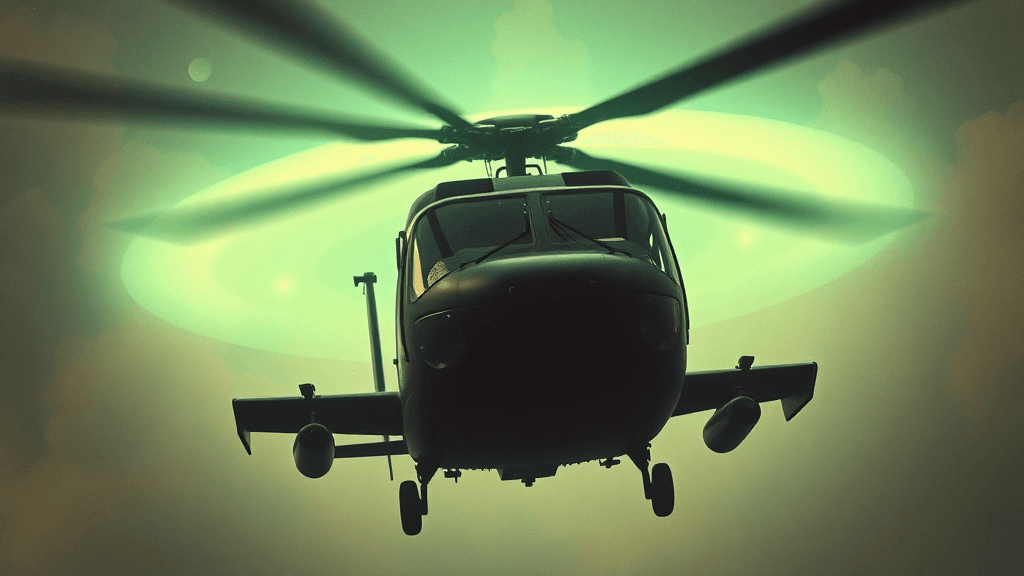
At daybreak on September 19, Iranian military personnel dispatched a helicopter team to a dry lake bed area where witnesses reported the object had descended. The team conducted radiation checks and preliminary investigation, though no official results were released to the public.
Official Documentation and Credibility
The incident generated substantial official documentation. A classified Defense Intelligence Agency intelligence cable was immediately distributed to the White House, U.S. State Department, CIA, NSA, Joint Chiefs of Staff, and military leadership on the same day. When declassified, a DIA analyst's assessment noted the case was "outstanding" and "a classic which meets all the criteria necessary for a valid study of the UFO phenomenon." The analyst rated the information source reliability as "High" and significance as "unique, timely, and of major significance."
A 1978 U.S. Air Force memorandum by Captain Henry S. Shields summarized the incident for Air Force intelligence distribution channels. The National Security Agency also included the case in its historical records on electronic interference with aircraft. Despite initial DIA statements that "More information will be forwarded when it becomes available," no subsequent declassified follow-up reports have surfaced publicly, though Iranian military records on the incident are believed to be substantial.
Cold War Context
The incident occurred during heightened Cold War tensions and Iranian political instability in the mid-1970s. The professional status of all military witnesses, the simultaneous electromagnetic effects across two separate aircraft, the radar confirmation, and the rapid official U.S. government response have secured the Tehran encounter's reputation as one of the most credible military-verified UFO cases in history.
Witnesses
Military pilots & crew: Major Parviz Jafari (F-4 commander), First Lieutenant Jalal Damirian (weapons officer), Lieutenant Yaddi Nazeri (F-4 pilot), weapons officer (backseat)
Control tower: Hossein Pirouzi (senior air traffic controller, Mehrabad Airport)
Military command: General Nader Yousefi (assistant deputy commander, IIAF operations)
Civilian: At least four citizens who reported initial sighting; crew of civilian airliner (radio interference only)
Evidence
Radar: Confirmed radar lock on object at 27 nautical miles; radar return size comparable to Boeing KC-135 Stratotanker; tracked with 150-knot closure rate
Electromagnetic interference: Total instrumentation failure on first F-4 at 25nm; weapons control panel failure during missile-firing attempt on second F-4; communications (UHF) loss on both aircraft; navigation system fluctuations (30–50°) at specific magnetic bearings; civilian airliner radio failure in same area
Visual observations: Rectangular shape with two large end lights and red circling light; brilliant flashing red, green, orange, and blue lights; observed from multiple civilian and military positions; object intensity too bright for pilots to determine physical structure
Official documentation: Defense Intelligence Agency intelligence cable; DIA analyst assessment; U.S. Air Force memorandum (1978); NSA records on aircraft electronic interference; distribution to White House, State Department, CIA, NSA, Joint Chiefs of Staff
Filed under
Watch
Extraordinary 1976 UFO incident in Tehran, Iran: Mother Ship sighting, object chased by fighter jets
The Incredible True Story of the Tehran UFO (Fighter Jet Failed)
The Infamous Tehran UFO Chase Incident by Iranian Fighter Jets in 1976 - FindingUFO
General Jafari, Iranian Air Force, Ret - The 1976 Tehran UFO Incident
Where this entry came from
ProvenanceAgent indexedUpdated 4mo ago4 sources
Drafted by the archive's AI research agent from the sources below; corrections from readers are reviewed and folded in.
- First indexed
- 13 JUL 26 // 16:19Z
- Last updated
- 13 JUL 26 // 16:19Z
- 1976 Tehran UFO Incident, Wikipedia
- The Vault Files: 1976 Iran Incident, John Greenewald Jr., The Black Vault
- The 1976 Tehran UFO Incident: A Military Encounter With the Unknown, New Space Economy
- The Tehran UFO Incident: Fighter Jets and System Failures, Project: Unredacted
Notes
- 1976 Tehran UFO Incident, Wikipedia
- The Vault Files: 1976 Iran Incident, John Greenewald Jr., The Black Vault
- The 1976 Tehran UFO Incident: A Military Encounter With the Unknown, New Space Economy
- The Tehran UFO Incident: Fighter Jets and System Failures, Project: Unredacted
Also available
I Know What I Saw
Investigative documentary featuring military and government officials from seven countries, including Iranian General Parviz Jafari, who testify about UFO encounters including the 1976 Tehran F-4 incident. Filmed at the 2007 National Press Club conference in Washington D.C.
Sightings: U.F.O. Confrontation: Iran
Television documentary episode examining the 1976 mass UFO encounter over Tehran. Features interviews with air traffic controllers and witnesses investigating whether the U.S. was involved in a cover-up of the incident.
UFO Hunters: UFO Dogfights
Series. Investigative episode featuring General Parviz Jafari's detailed account of scrambling F-4 Phantom jets to intercept an unidentified object over Tehran. Documents weapons system failures and instrument malfunctions experienced by the pilots.
Tehran UFO Incident, 1976: Iranian Fighter Jets Chase a UFO
Standalone documentary examining multiple perspectives on the 1976 Tehran incident. Explores how experienced pilots, air traffic controllers, and ground observers witnessed baffling aerial behaviors that remain unexplained.
Buying through these links supports the library. We may earn a commission.