The UFO Library: Military encounter
1976 Tehran UFO Incident
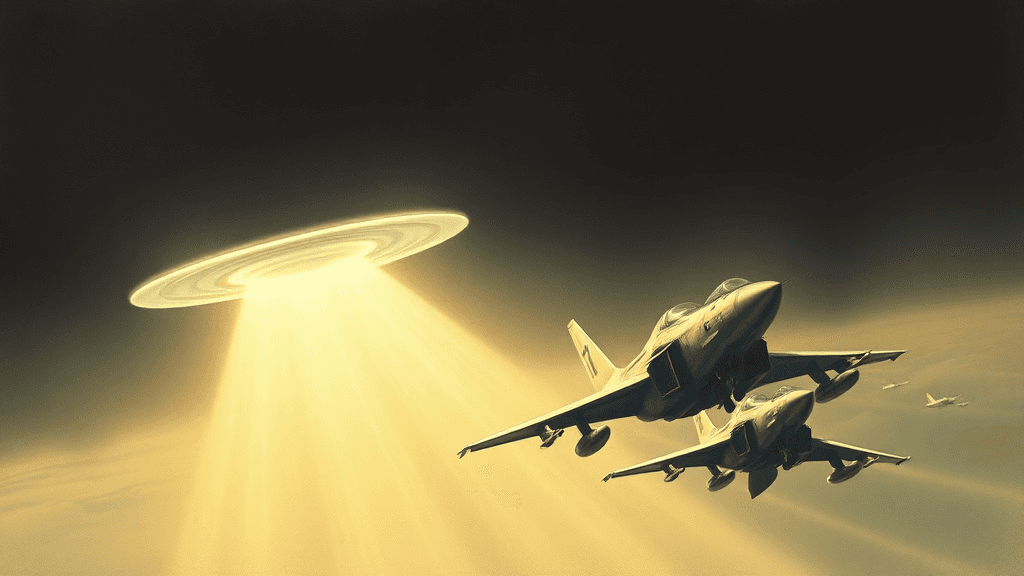
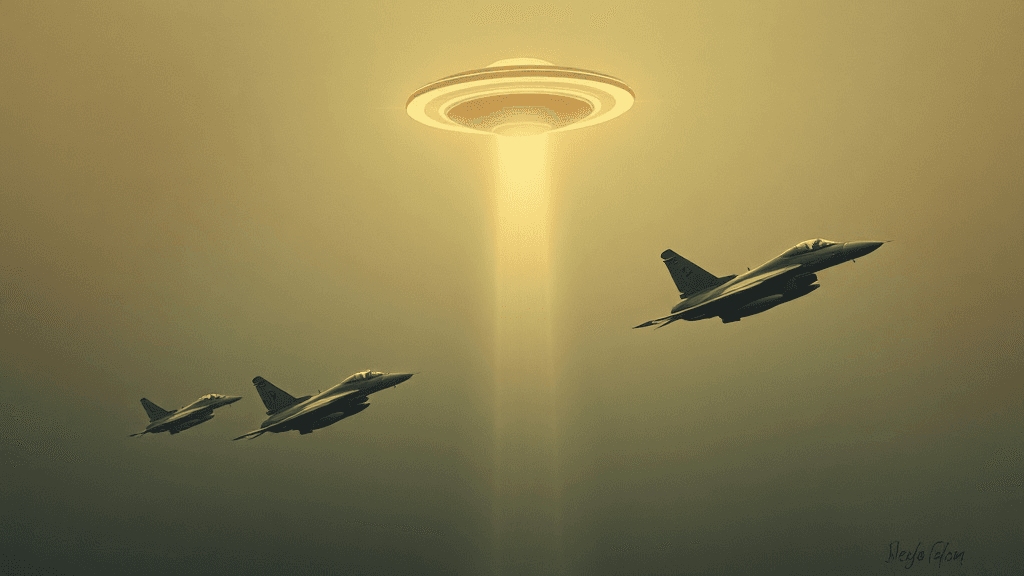
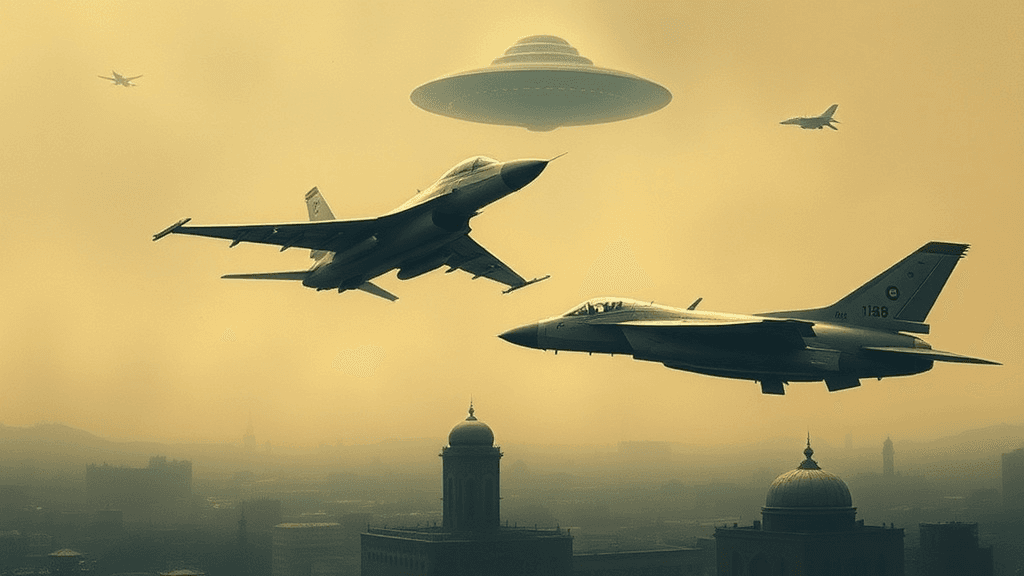
Two Iranian Air Force F-4 Phantom fighters engaged an unidentified object over Tehran, with both aircraft experiencing simultaneous instrumentation and weapons system failures during the encounter.
Overview
On the early morning of September 19, 1976, the Imperial Iranian Air Force conducted one of the most thoroughly documented military encounters with an anomalous aerial object. The incident began with civilian reports to Tehran's air defense command and escalated into a dramatic two-stage fighter intercept attempt that left both aircraft systems incapacitated and generated official documentation distributed to the highest levels of the U.S. government.
Initial Reports
At approximately 1:30 AM (01:30 hours local time), the Imperial Iranian Air Force command post received telephone reports from civilians in the Shemiran district of Tehran describing an unusually bright object in the night sky—far brighter than any star. Air defense commander General Youssefi initially dismissed the reports, but after consulting with controllers at nearby Mehrabad International Airport and observing the object himself from his balcony, he determined the threat was serious enough to scramble interceptors.
First Intercept: Lieutenant Nazeri
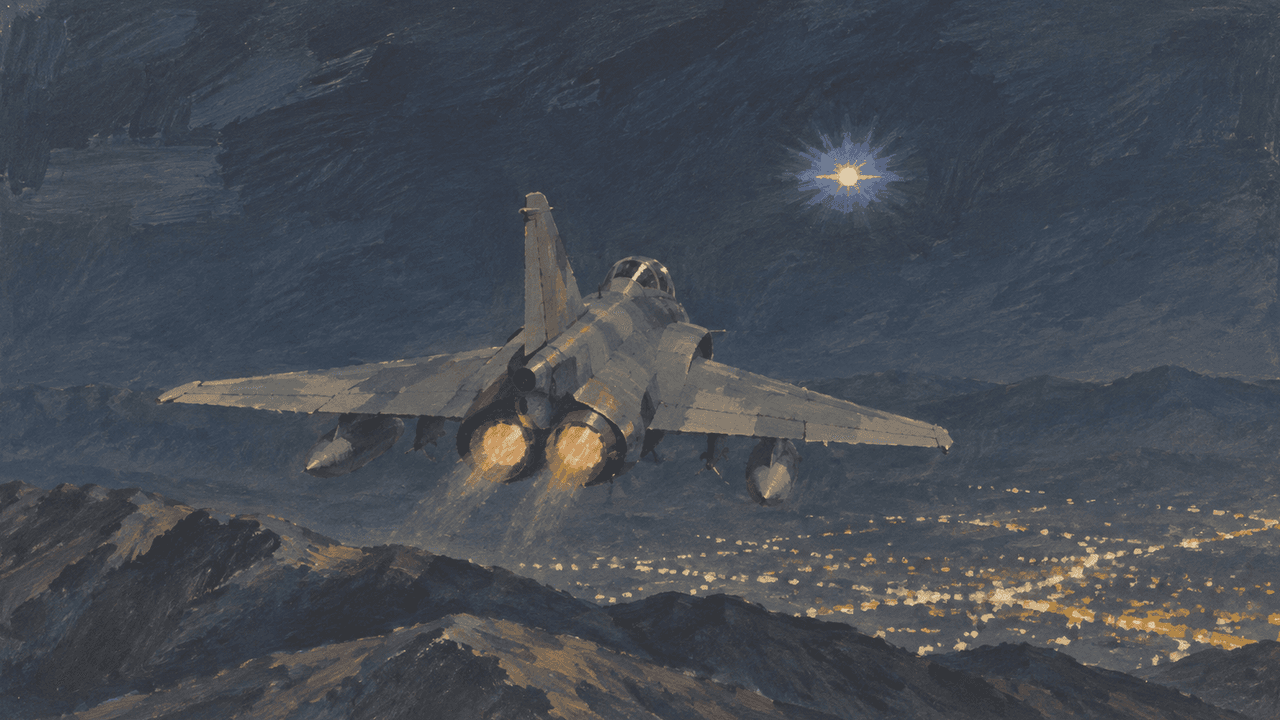
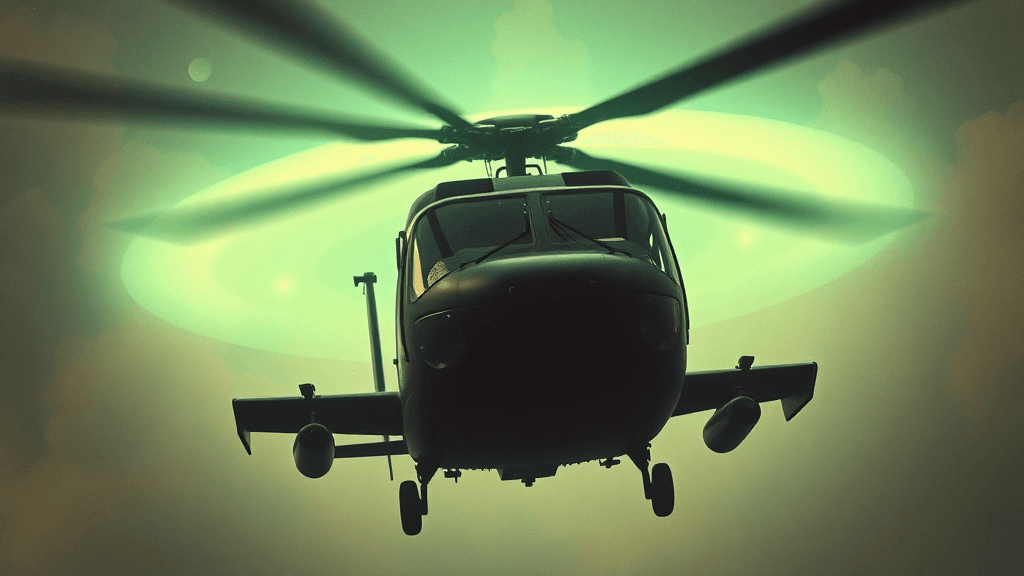
A single F-4 Phantom II piloted by Lieutenant Yaddi Nazeri was dispatched from Shahrokhi Air Force Base, located approximately 175 miles west of Tehran. As Nazeri's aircraft closed to within 25 nautical miles of the object, all instrumentation and communications systems failed simultaneously. The pilot reported that the object—visible as an intensely bright spherical form with a halo of multicolored lights (red, green, orange, and blue)—accelerated away at a velocity exceeding Mach 2, outpacing even his fighter jet. With his systems dead, Nazeri broke off the intercept and returned to base. All instrumentation was restored upon the aircraft's return to safe altitude.
Second Intercept: Major Jafari
A second F-4 Phantom II was immediately launched, piloted by Major Parviz Jafari, a squadron commander with significant flying experience. Jafari's weapons officer was First Lieutenant Jalal Damirian. As this aircraft approached the object, it acquired a radar lock at 27 nautical miles—the radar signature indicating a target comparable in size to a Boeing 707 jetliner, yet clearly a structured, organized craft rather than any known commercial or military aircraft.
As Jafari continued closing the distance, catastrophic system failures cascaded through his aircraft: UHF and internal communications shut down; the weapons control panel became inoperable; and most critically, the mechanical ejection seat—independent of all electronic systems—also failed. The pilot was now locked in his cockpit with no communications and no means of ejection. Unlike the first intercept, these systems did not restore immediately upon withdrawal.
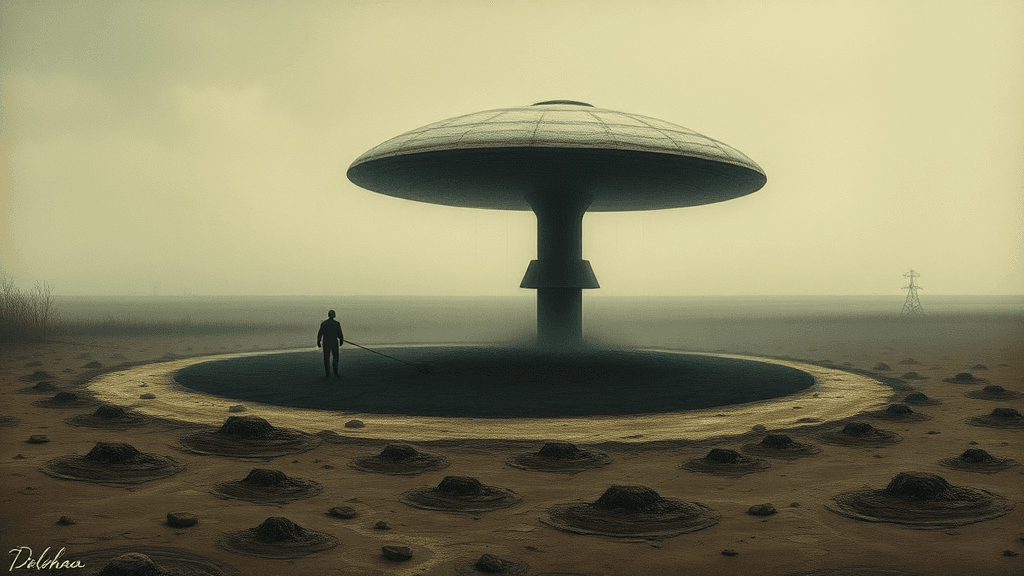
During this encounter, Jafari and Damirian observed a secondary object separate from the primary craft. This smaller object descended toward the ground with an extremely bright, pulsating light emission. Search teams were dispatched the following day to investigate the suspected landing site but found nothing conclusive.
Official Documentation and Credibility
The incident was confirmed and documented by multiple high-ranking Iranian Air Force officers. The U.S. Defense Intelligence Agency (DIA) issued a classified four-page report on the incident, which was distributed to the White House, the Secretary of State, the Joint Chiefs of Staff, the National Security Agency, and the Central Intelligence Agency. This official circulation to the highest echelons of U.S. government intelligence makes the Tehran Incident one of the most formally documented military encounters with anomalous phenomena in the Cold War era.
Later Testimony
In November 2007, over three decades after the incident, Major Parviz Jafari provided public testimony at a high-profile press conference in Washington, D.C., organized by investigative journalist Leslie Kean. In his testimony, Jafari asserted unequivocally that the craft he encountered was under intelligent control and represented technology far beyond the capabilities of any nation in 1976—or in 2007.
Significance
The Tehran Incident stands out among military UFO encounters for its concentration of credible witnesses (trained military pilots and air traffic controllers), dual-platform corroboration (radar and visual), simultaneous instrumentation effects on two separate aircraft, and official U.S. government documentation. The fact that both aircraft systems failed in ways that appeared coordinated—particularly the weapons systems and communications on both jets—suggests either an electromagnetic phenomenon of extraordinary power or a deliberate disabling action.
Witnesses
- Major Parviz Jafari (Iranian Air Force squadron commander, F-4 pilot, second intercept)
- First Lieutenant Jalal Damirian (F-4 weapons officer, second intercept)
- Lieutenant Yaddi Nazeri (F-4 pilot, first intercept)
- General Youssefi (Imperial Iranian Air Force commander, ground observation)
- Hossein Pirouzi (air traffic controller, Mehrabad International Airport)
- Civilian reports from Shemiran district residents (initial callers)
- Nearby commercial aircraft crew (secondary confirmation)
Evidence
- Simultaneous instrumentation failures on two F-4 Phantom II aircraft (comms, weapons systems, ejection seats, navigation)
- Radar lock and tracking data from Mehrabad International Airport control tower and F-4 radar system
- Visual descriptions from multiple military observers matching multi-colored light signature
- U.S. Defense Intelligence Agency (DIA) classified report distributed to White House, State Department, Joint Chiefs of Staff, NSA, and CIA
- Secondary object observed separating from primary craft and descending with bright light emission
- Performance characteristics exceeding Mach 2 (faster than first F-4 could pursue)
- Radar signature comparable to Boeing 707 but with exotic light display incompatible with known aircraft
Filed under
Watch
Tehran UFO Incident, 1976: Iranian Fighter Jets Chase a UFO
Extraordinary 1976 UFO incident in Tehran, Iran: Mother Ship sighting, object chased by fighter jets
The Mysterious Tehran UFO Incident with Multiple Jet Fighters in 1976 - FindingUFO
Weird Or Fake? Episode 3 (1976 Tehran UFO incident)
1976 Tehran UFO Incident - Military Jets Chase UFO Over Iran | Richard Dolan
Where this entry came from
ProvenanceAgent indexedUpdated 3mo ago4 sources
Drafted by the archive's AI research agent from the sources below; corrections from readers are reviewed and folded in.
- First indexed
- 25 JUL 26 // 18:18Z
- Last updated
- 25 JUL 26 // 19:19Z
- 1976 Tehran UFO incident, Wikipedia
- The 1976 Iran Incident, The Black Vault
- The 1976 The Tehran, Iran UFO - F-4 Incident, UFO Casebook
- Tehran Incident, Enigma Labs
Notes
- 1976 Tehran UFO incident, Wikipedia
- The 1976 Iran Incident, The Black Vault
- The 1976 The Tehran, Iran UFO - F-4 Incident, UFO Casebook
- Tehran Incident, Enigma Labs
Also available
The Phenomenon
Comprehensive UFO documentary examining unidentified aerial phenomena with testimony from high-ranking government officials, NASA astronauts, and a focus on the history of sightings since WWII. Covers the 1976 Tehran incident alongside other major cases.
I Know What I Saw
Documentary filmed at the National Press Club in Washington, D.C., where James Fox gathers credible UFO witnesses to testify about their experiences. Features testimony from General Parviz Jafari regarding the 1976 Tehran incident.
UFO Hunters
Series. History Channel documentary series investigating UFO sightings with expert analysis. Season 1, Episode 11 features the 1976 Tehran incident with testimony from pilot Parviz Jafari about the F-4 Phantom jet interception.
Sightings
Series. Paranormal news television series covering UFO sightings, ghosts, and other unexplained phenomena. The 1994 episode covers the 1976 Tehran UFO incident with interviews from Iranian air traffic controller Hossein Pirouzi and pilot Parviz Jafari.
Buying through these links supports the library. We may earn a commission.