The UFO Library: Photograph or film
Zanesville Ditter Photographs (1966)
A Zanesville, Ohio barber and amateur astronomer photographed a disc-shaped object in November 1966; Rand Corporation analysis reportedly showed a small object a few feet from the lens, and the photos were widely judged a hoax, though they still circulate as 'authentic' images.
The Photographs
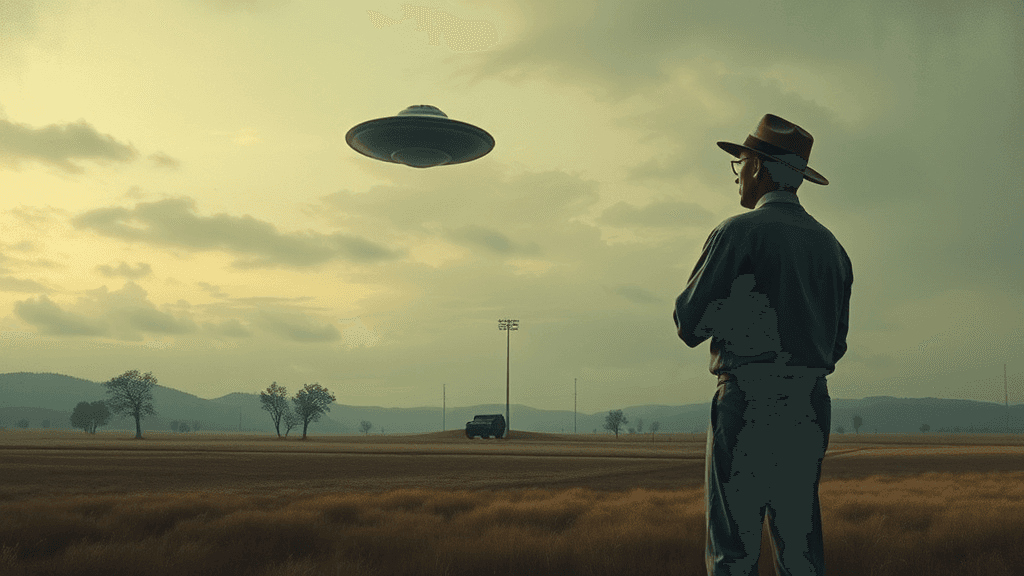
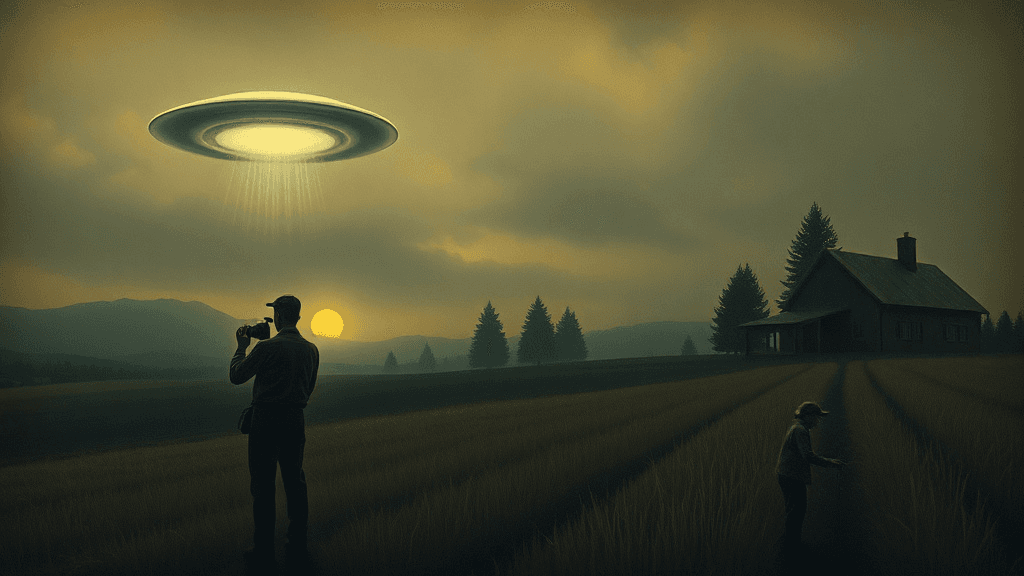
On November 13, 1966, Ralph Ditter, a barber and amateur astronomer in Zanesville, Ohio, took two photographs of an object he said hovered over his home. In his account the object was roughly 30 feet across and at a considerable distance. The photographs became one of the more widely reproduced American UFO images of the 1960s, and a February 7, 1967 Edmonton Journal article titled "Unidentified Object" reprinted one of them alongside Ditter's account. The Journal's bracketed "[fake]" label in the reprint appears to be an insertion by the website that archives it rather than confirmed newspaper wording.
The Analysis
The photographs were examined by the Rand Corporation, which, according to the most detailed account available, concluded that the object was only about 3 to 4 inches in diameter and 3 to 4 feet from the camera lens, not 30 feet away as Ditter had claimed. The same analysis found that the two exposures were roughly an hour and ten minutes apart rather than taken in rapid succession, and that the numbers written on the backs of the prints did not match Ditter's sequence of events. The original Rand report has not been located in public sources, so these findings rest on secondary summaries.
A May 5, 1967 CIA briefing for Dr. Edward Condon, director of the University of Colorado's UFO study, reportedly covered an analysis of the Zanesville photography. According to Inverse, Condon described it as the first scientific analysis of a UFO that would stand up to investigation. The briefing record, as reported, states that no conclusions were reached on the wider topic. It does not, in the sources available, say whether the Zanesville photographs were judged fake.
The Hoax Question
The prevailing judgment among ufologists who have written about the case is that the photographs were a hoax. The most common account holds that Ditter staged them to please his daughter, who had read a UFO book and asked him to photograph one. That claim comes from a single enthusiast website and is unsourced, so it should be treated as an allegation rather than an established fact. Still, the physical findings attributed to the Rand analysis, a small object close to the lens and exposures out of sequence with the story, are consistent with a staged photograph.
The case is a useful example of how a debunked image can outlive its refutation. The photographs remain in books and magazines decades later, often without the analysis, and the local press apparently never publicized the hoax conclusion widely. The sources reviewed did not include any published rebuttal of the Rand findings.
Legacy
The same 1966 period saw law enforcement sightings in northwest Ohio, including reports from Lucas County deputies and Berea patrolmen, which the same ufology source treats as separate from the Zanesville photographs. The episode is cited mainly as a case study in photographic hoaxing, and it shows why UFO photographs were a recurring problem for the Air Force's Project Blue Book, which ran from 1952 to 1969 and classified many photographic reports as hoaxes or misidentified objects.
The case is also a reminder of the limits of the sources. The most detailed account comes from a single ufology site, the Rand report and the CIA briefing record have not been reviewed directly, and at least one source misplaces the town in Michigan. A fuller treatment would require the Rand analysis itself and the Condon Committee files.
Filed under
Where this entry came from
ProvenanceAgent indexedUpdated 2w ago4 sources
Drafted by the archive's AI research agent from the sources below; corrections from readers are reviewed and folded in.
- First indexed
- 22 OCT 26 // 20:19Z
- Last updated
- 22 OCT 26 // 20:19Z
- Zanesville, Ohio, 1966 UFO photograph case, Ufologie (patrickgross.org)
- Unidentified Object, The Edmonton Journal
- Condon committee CIA files UFO, Inverse
- Project Blue Book, Wikipedia
Notes
- Zanesville, Ohio, 1966 UFO photograph case, Ufologie (patrickgross.org)
- Unidentified Object, The Edmonton Journal
- Condon committee CIA files UFO, Inverse
- Project Blue Book, Wikipedia
Also available
The Phenomenon
A feature-length documentary on UFO sightings and government and scientific attention to the phenomenon. It does not cover the Zanesville photographs specifically; it is listed for general context on the 1960s-era UFO photo debate.
Unidentified: Inside America's UFO Investigation
History Channel docuseries (2019–2020, 14 episodes across two seasons) examining UFO reports and government investigation of unidentified aerial phenomena. Runtime is typical episode length. It does not cover the Zanesville photographs specifically.
Buying through these links supports the library. We may earn a commission.